
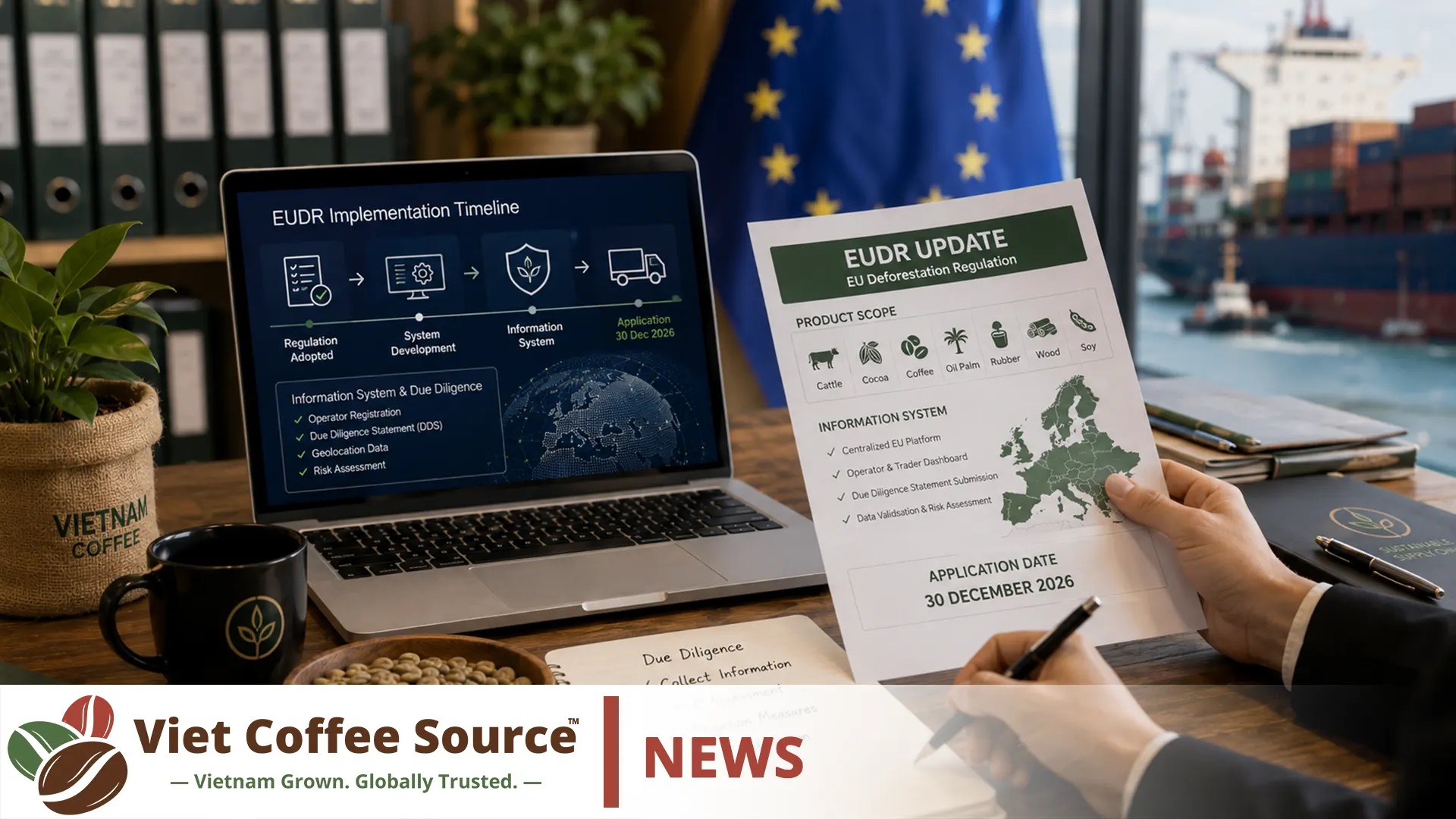
EU Updates EUDR Product Scope and Information System Ahead of December 2026
The European Commission has adopted new measures updating the product scope and digital infrastructure of the EU Deforestation Regulation as companies prepare for the main rules to apply from 30 December 2026. The package includes changes to Annex I of the regulation and new technical rules governing the EUDR Information System used for due diligence submissions.
The updates are intended to provide clearer product classifications, reduce unnecessary administrative work and ensure that the digital system reflects amendments agreed by EU lawmakers in December 2025. For coffee companies exporting to or importing into the European Union, the changes provide greater clarity about which products are covered and how compliance information must be submitted.
Soluble Coffee Added to the Product Scope
The updated product list continues to cover coffee as one of the seven commodities addressed by the EUDR. The Commission has also added soluble coffee to the list of derived products covered by the regulation, alongside selected additions involving palm oil and cattle products.
However, newly added products such as soluble coffee will not become subject to the regulation immediately on 30 December 2026. The Commission has provided an additional preparation period, with these products expected to enter the EUDR scope from 30 December 2027.
This distinction is important for suppliers handling different forms of Vietnamese coffee. Green coffee and other coffee products already listed in Annex I remain connected to the main application timetable, while soluble coffee manufacturers and buyers receive additional time to prepare traceability records, supplier data and internal compliance procedures.
Information System Receives New Technical Rules
The Commission has also adopted an Implementing Act establishing updated rules for the EUDR Information System. The system operates through the EU’s TRACES platform and allows operators or their authorised representatives to create and submit due diligence statements and simplified declarations.
The updated platform includes functions required by the revised regulation, including simplified declarations for qualifying micro and small primary operators. Technical specifications for automated application programming interfaces have also been updated to support companies that need to transfer compliance information from their own systems.
The Commission reopened the Information System following technical updates at the end of June 2026 and plans to continue adding functions, revising user documentation and providing training. Companies should therefore avoid treating their current submission process as final and should continue monitoring technical guidance before enforcement begins.
December 2026 Remains the Main Compliance Date
Most EUDR obligations will apply from 30 December 2026 to large and medium-sized operators. Micro and small operators generally receive until 30 June 2027, although smaller operators already covered by the EU Timber Regulation remain connected to the December 2026 timetable.
For coffee supply chains, the regulation requires relevant products placed on the EU market or exported from it to be deforestation-free and produced in accordance with applicable legislation in the country of origin. Operators placing covered coffee products on the EU market for the first time must hold the required information and complete the applicable due diligence process.
Companies sourcing Vietnamese coffee should therefore confirm product classification, supply-chain roles and responsibility for submitting declarations. Importers should also check whether their suppliers can provide farm or production-area geolocation data, legality information and traceable links between exported lots and their origin records.
Exporters Need Product-Level Preparation
The update does not reduce the need for exporters to organise reliable farm-level information. Instead, it makes accurate product classification more important because obligations and implementation dates may differ between green coffee, roasted coffee and soluble products.
Vietnamese suppliers preparing for the European market should connect commercial documentation with internal quality and compliance procedures. Purchase records, processing information, lot identification and geolocation data should remain consistent across the supply chain and be available for review when requested by an operator or competent authority.
Export planning should also account for the time needed to verify data before shipment. Resolving missing farm information, inconsistent quantities or incorrect product codes after cargo has already been dispatched may cause delays and increase the risk of rejected or questioned declarations. Structured export procedures can help ensure that traceability and shipping documentation are prepared together.
Buyers Should Review Supplier Readiness
European coffee buyers are expected to place greater emphasis on suppliers that can deliver verifiable information in a consistent format. Commercial price and cup quality will remain important, but documentation readiness may increasingly determine whether a supplier can participate in regulated EU supply chains.
The latest measures provide businesses with more certainty, but they do not remove the operational work required before December 2026. Coffee exporters and importers should use the remaining preparation period to test data collection, clarify contractual responsibilities and confirm how declarations will be managed through the EUDR Information System.
Buyers seeking Vietnamese coffee with structured sourcing and traceability support can submit a wholesale inquiry with their required product type, destination, volume and compliance expectations.