
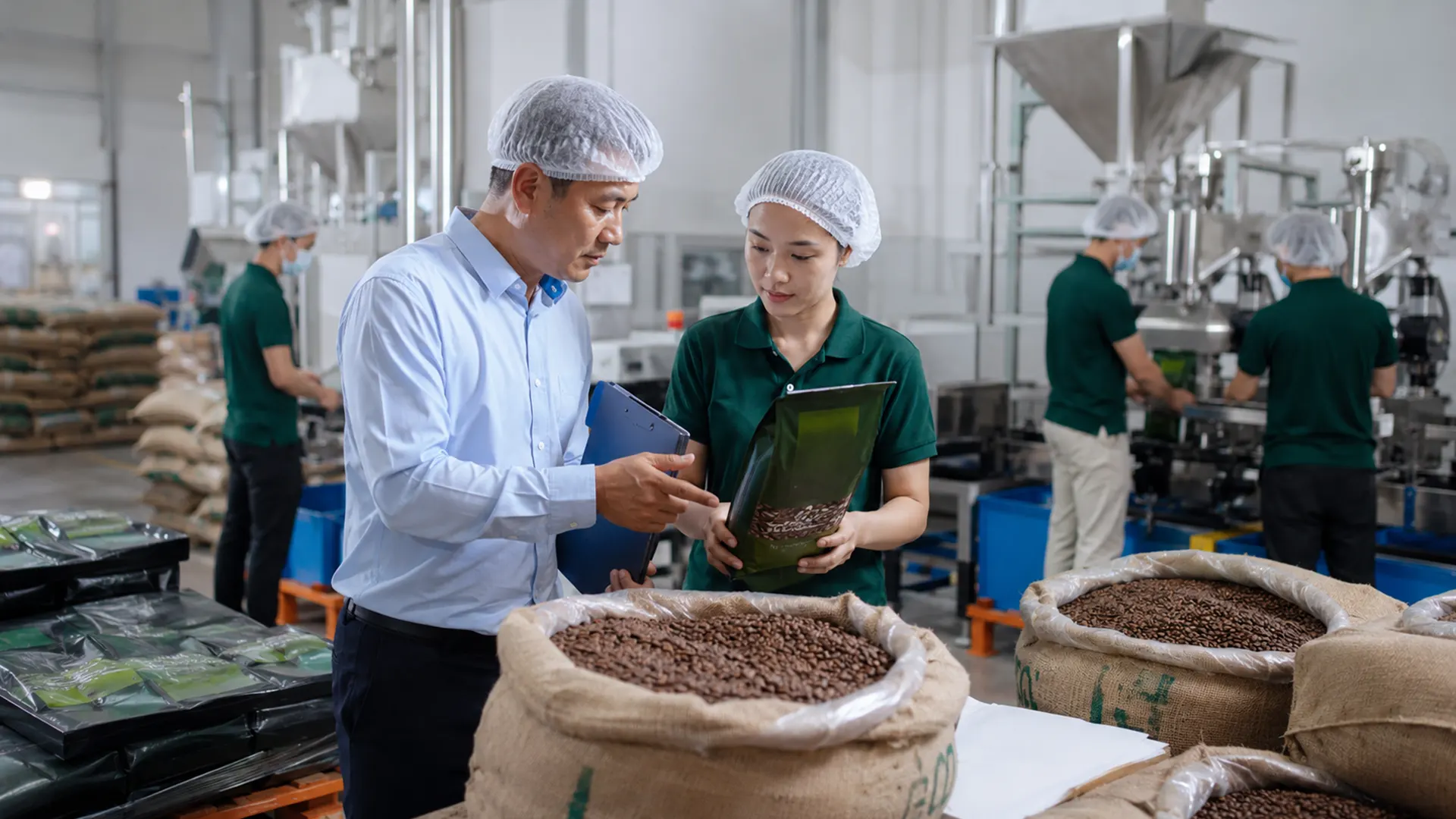
Certifications
Certifications provide structured evidence that a coffee producer, processor, exporter, roaster, manufacturer, warehouse, laboratory, product or supply-chain program has been assessed against defined requirements. For professional buyers, certifications may support supplier qualification, food-safety management, sustainability programs, organic claims, religious requirements, traceability, private-label production and destination-market documentation. However, a certificate should always be reviewed according to its holder, certified site, scope, covered products, issuing organization, validity period and relationship to the exact commercial lot.
Viet Coffee Source helps professional buyers coordinate certification requirements with selected coffee producers, processors, exporters, roasters, instant-coffee manufacturers, packaging facilities, laboratories and inspection partners in Vietnam. Support may include certificate collection, scope review, validity checks, product-coverage verification, supplier-document coordination, laboratory planning, traceability review, private-label documentation and pre-shipment verification. Viet Coffee Source does not replace certification bodies, accredited laboratories, inspection companies, competent authorities or the importer’s regulatory responsibilities. Final certification requirements depend on the product, facility, buyer policy, destination market, commercial claim, lot and contract.
Why Coffee Certifications Matter
Certifications can help buyers evaluate whether a supplier operates defined systems, follows selected production requirements or participates in a recognized food-safety, sustainability, organic or chain-of-custody program. They can reduce information gaps between producers, exporters, importers, retailers, distributors and consumers.
Relevant certifications may help:
- Support supplier qualification
- Demonstrate structured food-safety management
- Support organic or sustainability claims
- Confirm selected religious-production requirements
- Provide evidence of audited management systems
- Support private-label and retail programs
- Improve documentation consistency
- Support traceability and chain-of-custody programs
- Reduce supplier-onboarding time
- Provide a basis for buyer audits and risk assessment
- Support customer documentation requests
- Improve confidence before commercial production
Certification does not automatically prove that every lot meets every product specification. Buyers should combine certificate review with written specifications, approved samples, quality-control procedures, laboratory testing and shipment verification.
Certification, Inspection and Product Testing
Certification, inspection and testing are related but different activities. Each provides a different type of evidence.
| Activity | Main Purpose | Typical Output |
|---|---|---|
| Certification | Assess a system, product, site or program against defined requirements | Certificate, audit report or certification decision |
| Inspection | Verify the condition, quantity or conformity of a specific product, lot or shipment | Inspection report, weight certificate, loading report or conformity statement |
| Laboratory testing | Measure selected physical, chemical, microbiological or compositional parameters | Laboratory report or certificate of analysis |
| Quality control | Confirm that actual production and finished goods meet agreed requirements | Internal records, grading results, cupping reports and release approval |
A supplier may hold a valid certification and still produce a lot that does not meet the buyer’s moisture, defect, flavor, packaging or labeling specification. Certification should therefore be treated as one part of a broader supplier and quality-management process.
Main Categories of Coffee Certifications
Certification requirements vary according to the type of coffee, production process, destination market, buyer policy and commercial claim.
| Certification Category | Primary Focus | Typical Buyer Use |
|---|---|---|
| Food-safety management | Hazard control, hygiene, procedures, records and corrective action | Supplier approval and private-label production |
| Quality management | Documented processes, consistency and continual improvement | Supplier-management and operational review |
| Organic certification | Organic production, handling, processing and chain of custody | Certified organic product claims |
| Sustainability certification | Environmental, social and economic criteria | Responsible-sourcing and customer programs |
| Religious certification | Ingredient, processing and handling requirements | Halal or kosher market requirements |
| Chain-of-custody certification | Controlled movement of certified material through the supply chain | Traceable certified-product claims |
| Laboratory accreditation | Competence for defined testing methods | Reliable laboratory results |
| Product or market certification | Requirements linked to a specific product, claim or destination | Retail, importer or regulatory documentation |
The correct certification package should be selected according to the actual project rather than requesting every available certificate.
Food-Safety Management Certifications
Food-safety management certifications evaluate whether a facility operates documented systems for identifying, controlling and monitoring food-safety hazards. They may be relevant to coffee processors, roasters, instant-coffee manufacturers, blending facilities, packing plants and private-label producers.
The review may cover:
- Management responsibility
- Hazard analysis
- Good manufacturing practices
- Personal hygiene
- Cleaning and sanitation
- Pest control
- Water-quality controls
- Foreign-material control
- Supplier approval
- Traceability
- Recall procedures
- Corrective and preventive action
- Internal audits
- Document and record control
The certificate scope should include the relevant site and activity. A certificate covering green-coffee storage may not cover roasting, grinding, blending or retail packing performed at another facility.
HACCP-Based Programs
Hazard Analysis and Critical Control Point programs focus on identifying potential biological, chemical and physical hazards and establishing appropriate controls. HACCP may operate as an internal system, a buyer requirement or part of a broader certified food-safety management program.
A HACCP review may include:
- Product description
- Intended use
- Process-flow diagram
- Hazard identification
- Risk assessment
- Control measures
- Critical control points where applicable
- Critical limits
- Monitoring procedures
- Corrective actions
- Verification activities
- Recordkeeping
The existence of a HACCP document alone does not confirm effective implementation. Buyers may need supporting audit information, production records or facility assessment.
GMP and Hygiene Programs
Good Manufacturing Practices provide the operational foundation for safe and controlled food production. GMP requirements may be audited independently or incorporated into a broader certification system.
Typical GMP areas include:
- Facility design and maintenance
- Equipment condition
- Employee hygiene
- Protective clothing
- Cleaning procedures
- Chemical control
- Pest prevention
- Waste management
- Glass and brittle-plastic control
- Foreign-object prevention
- Storage practices
- Production-line clearance
GMP is especially important for roasted coffee, ground coffee, instant coffee, drip coffee, flavored coffee and formulated beverage products.
ISO-Based Management Systems
ISO-based certifications may relate to food safety, quality, environmental management or other operational systems. Buyers should review the exact standard, certified activity and facility rather than relying only on the ISO name.
Certificate review may consider:
- Standard number and edition
- Certificate holder
- Certified address
- Scope statement
- Covered activities
- Covered products
- Certification body
- Accreditation information
- Issue date
- Expiry date
- Surveillance status
- Suspension or withdrawal status
A quality-management certification may demonstrate documented processes, but it does not replace product-specific inspection, cupping or laboratory testing.
GFSI-Recognized Food-Safety Programs
Some international retailers, brand owners and food-service companies require suppliers to operate a certification program recognized through established global food-safety benchmarking structures. The required program may depend on the buyer’s supplier policy and the manufacturing activity.
Buyer review should confirm:
- Whether the requested scheme is accepted by the buyer
- Whether the exact production site is certified
- Whether the scope covers the product
- Whether the certification is currently valid
- Whether there are unresolved major findings
- Whether outsourced processes are covered
- Whether packaging operations are included
Not every coffee project requires the same food-safety certification. Requirements should be confirmed before supplier selection and commercial production.
Quality-Management Certification
Quality-management certification focuses on documented processes, customer requirements, risk management, nonconforming product, corrective action and continual improvement.
It may support:
- Document control
- Specification management
- Supplier evaluation
- Production planning
- Equipment calibration
- Complaint handling
- Corrective action
- Internal audits
- Management review
- Performance monitoring
Quality-management certification does not define the buyer’s coffee grade, moisture, defect, roast, grind or flavor requirements. These should be established separately through product specifications.
Organic Coffee Certification
Organic certification supports claims that coffee has been produced, handled, processed and documented according to an applicable organic program. Requirements may affect farms, producer groups, collectors, processors, warehouses, exporters, roasters, manufacturers and packing facilities.
An organic program may require:
- Approved production practices
- Restrictions on selected agricultural inputs
- Documented farm or producer-group controls
- Separation of organic and non-organic material
- Cleaning and changeover procedures
- Input and output reconciliation
- Lot traceability
- Approved processing aids
- Label approval
- Transaction or shipment documentation
- Annual inspections
- Control of subcontracted operations
The organic certificate must cover the correct operator, activity, product and market program. Organic status at farm level does not automatically authorize every processor, exporter, roaster or packer to sell the final product as certified organic.
Organic Scope and Product Coverage
Organic certificates often contain an annex, product list or scope schedule. Buyers should verify whether the exact coffee product is covered.
The review may confirm:
- Green coffee coverage
- Roasted-coffee coverage
- Ground-coffee coverage
- Instant-coffee coverage
- Formulated-product coverage
- Packaging activity
- Storage activity
- Export or trading activity
- Permitted labeling claim
- Applicable organic market
A certificate that covers raw green coffee may not cover a three-in-one product containing sugar, creamer and other ingredients.
Organic Chain of Custody
Organic integrity must be maintained throughout the supply chain. Certified material should remain identifiable and controlled from the approved producer through processing, storage, export and final packing.
Chain-of-custody records may include:
- Supplier certificates
- Farm or producer-group references
- Purchase records
- Receiving records
- Lot numbers
- Processing records
- Cleaning records
- Mass-balance calculations
- Warehouse records
- Sales records
- Shipment documents
- Transaction certificates where applicable
More information about lot-level control is available on our traceability page.
Sustainability Certifications
Sustainability certifications may evaluate environmental, social, economic and farm-management requirements. The exact criteria depend on the selected program.
Possible areas include:
- Farm management
- Soil protection
- Water management
- Agrochemical controls
- Biodiversity protection
- Waste management
- Worker health and safety
- Labor conditions
- Child-labor prevention
- Community engagement
- Producer training
- Traceability
- Chain-of-custody control
Buyers should distinguish between certified coffee, verified programs, supplier codes of conduct and unsupported sustainability statements.
Rainforest and Farm-Sustainability Programs
Farm-sustainability programs may involve producer requirements, group-management systems, internal inspections, external audits and supply-chain traceability.
Buyer review may include:
- Certificate holder
- Producer-group coverage
- Certified volume
- Crop period
- Chain-of-custody status
- Mass-balance or segregation model
- Supplier authorization
- Transaction records
- Claim and logo permissions
Availability depends on origin, supplier network, production volume and certification status. Certified volume should be confirmed before it is offered commercially.
Fair-Trade and Social Certification Programs
Fair-trade and social programs may focus on producer organizations, working conditions, purchasing structures, premiums, community benefits or responsible labor practices.
Relevant review areas may include:
- Eligible producer organization
- Certified trader or exporter
- Certified product category
- Volume availability
- Minimum-price requirements where applicable
- Premium requirements
- Traceability model
- Chain-of-custody requirements
- Claim approval
- Transaction documentation
Commercial terms associated with a social certification program should be clarified before the quotation is finalized.
4C and Verification Programs
Verification programs may provide a structured framework for economic, social and environmental practices without following the same certification model as other programs. Buyers should confirm the exact program status, unit coverage, traceability option and claim permitted.
Review may include:
- Verified production unit
- Validity period
- Covered volume
- Supply-chain participant
- Traceability model
- Documentation available
- Permitted communication claim
The terms certification, verification and compliance program should not be used interchangeably without checking the applicable rules.
Halal Certification
Halal certification may be requested for roasted coffee, instant coffee, three-in-one products, flavored coffee and other formulated beverages. Pure coffee may appear simple, but processing aids, flavors, creamers, cleaning chemicals, shared equipment and packaging operations can affect certification requirements.
A halal review may cover:
- Ingredient approval
- Supplier declarations
- Processing aids
- Flavor systems
- Creamer composition
- Cleaning procedures
- Cross-contact prevention
- Storage separation
- Production scheduling
- Packaging materials
- Label wording
- Certified production site
The halal certificate should be issued by an organization acceptable to the buyer or destination market. Acceptance requirements may differ between countries and customers.
Kosher Certification
Kosher certification may be required by selected buyers, retailers or destination markets. Requirements can apply to ingredients, processing equipment, cleaning, production scheduling and site supervision.
Review may include:
- Certified facility
- Certified product list
- Approved ingredients
- Approved suppliers
- Dairy, non-dairy or other status
- Equipment-use conditions
- Cleaning and changeover controls
- Label and symbol authorization
- Validity period
A facility certificate should be checked against the exact product because not every item produced at the site may be covered.
Vegan and Vegetarian Claims
Vegan or vegetarian claims may be relevant to instant beverages, flavored coffees and three-in-one products. These claims can depend on ingredient composition, processing aids and cross-contact controls.
Verification may consider:
- Creamer origin
- Flavor carriers
- Emulsifiers
- Anti-caking agents
- Processing aids
- Supplier declarations
- Shared-equipment risks
- Label wording
- Testing or certification requirements
The claim should be supported by actual formula and supplier documentation rather than assumptions based on the product name.
Gluten-Free and Allergen-Related Claims
Pure coffee is not generally formulated with gluten-containing ingredients, but formulated products may contain ingredients or be produced in facilities where allergen cross-contact requires assessment.
Review may include:
- Ingredient specifications
- Allergen declarations
- Supplier statements
- Shared-line information
- Cleaning validation
- Destination-market thresholds
- Testing requirements
- Label statements
The importer should confirm the legal requirements for any gluten-free or allergen-related claim in the destination market.
Geographical and Origin Certifications
Some coffee programs may involve geographical indications, protected-origin systems, collective marks or regional certifications. These programs may restrict eligible production areas, producers, processing methods and commercial use of the name.
Origin-program review may include:
- Protected geographical area
- Eligible producer
- Approved processing method
- Product specification
- Traceability requirements
- Logo or name-use authorization
- Certificate or membership status
- Export-document requirements
A regional name should not be used as a certified geographical claim unless the applicable program requirements are met.
Laboratory Accreditation
Laboratory accreditation provides evidence that a laboratory has demonstrated competence for defined testing activities. Buyers should confirm whether the required method is included within the laboratory’s accredited scope.
Laboratory review may consider:
- Accreditation body
- Accreditation standard
- Laboratory address
- Accredited scope
- Specific test method
- Measurement range
- Sample type
- Accreditation validity
- Use of subcontracted testing
- Reporting format
A laboratory may be accredited for some methods but not for every test it offers. The exact method should therefore be checked before samples are submitted.
Inspection-Company Accreditation
When independent inspection is required, the buyer may need to review the inspection company’s competence, accreditation, experience and reporting procedures.
Review may include:
- Inspection scope
- Coffee-sector experience
- Sampling procedures
- Weight-verification capability
- Loading-supervision capability
- Laboratory coordination
- Conflict-of-interest controls
- Accreditation status
- Report format
- Geographic coverage
The inspection scope should be agreed before the company visits the warehouse, factory or loading site.
Certificate of Analysis
A certificate of analysis is not normally the same as a management-system certification. It reports selected test results for a sample or lot.
A certificate of analysis may include:
- Product name
- Lot number
- Sample date
- Test date
- Test parameters
- Test methods
- Results
- Units
- Acceptance limits
- Laboratory or issuer
- Authorized approval
The buyer should verify that the tested sample represents the commercial lot and that the required parameters are included.
Quality Certificate
A quality certificate may summarize physical, sensory or commercial results for a particular coffee lot. Its content depends on the supplier, inspector, laboratory or contract.
It may include:
- Origin
- Grade
- Screen size
- Moisture
- Defect count
- Foreign matter
- Cupping result
- Net weight
- Lot identification
- Inspection date
The term “quality certificate” is not sufficient by itself. The buyer should specify the required tests, methods, issuer and acceptance criteria.
Phytosanitary Certification
A phytosanitary certificate may be required for selected plant products and destinations, particularly for green coffee. Requirements depend on the commodity form, destination country and applicable plant-health rules.
Coordination may involve:
- Commodity description
- Botanical information where required
- Origin
- Quantity
- Packaging
- Inspection arrangements
- Treatment information where applicable
- Container details
- Destination requirements
- Official application documents
Availability and requirements should be confirmed for the exact shipment before loading. Further information is available on our export documents page.
Certificate of Origin
A certificate of origin supports the declared origin of goods for customs, trade-agreement or buyer-documentation purposes. It is different from an organic, sustainability or geographical-origin certification.
Review may include:
- Exporter
- Consignee
- Product description
- HS classification
- Origin criteria
- Invoice reference
- Quantity and weight
- Transport details
- Issuing authority
- Applicable trade arrangement
The correct form and origin rule depend on the destination and commercial transaction.
Health, Free-Sale and Market Documents
Some buyers or destination markets may request health certificates, free-sale certificates, manufacturer declarations, facility registrations or other official documents. These should not automatically be classified as product certifications.
Requirements may depend on:
- Product type
- Destination country
- Import permit
- Manufacturer status
- Competent authority
- Product registration
- Shipment value
- Buyer policy
- Retail-channel requirements
The importer should confirm the exact document name, issuing authority, format and legalization requirement before production or shipment.
Private-Label Certification Requirements
Private-label projects often require a combination of facility certifications, product documents, laboratory reports, packaging declarations and buyer-specific forms.
A private-label approval package may include:
- Facility certification
- Food-safety questionnaire
- Supplier approval form
- Product specification
- Ingredient specifications
- Allergen declaration
- Nutritional information
- Packaging compliance declaration
- Laboratory reports
- Traceability procedure
- Recall procedure
- Approved artwork
- Certificate of analysis
- Pre-shipment inspection report
Certification requirements should be identified at the start of the project because changing the approved production site later may require new audits, documents and samples.
Packaging Certifications and Declarations
Coffee packaging suppliers may provide declarations or certifications relating to food contact, material composition, migration testing, manufacturing systems or environmental claims.
Packaging documentation may include:
- Food-contact declaration
- Material structure
- Migration-test report
- Ink declaration
- Adhesive declaration
- Recycled-content information
- Barrier-performance data
- Supplier quality certification
- Batch or production reference
- Compliance with buyer restrictions
Packaging documentation should relate to the exact material structure used for commercial production. More information is available on our packaging options page.
Certification Scope
The scope statement is one of the most important parts of a certificate. It explains which activities, products or services have been certified.
Scope review should confirm whether the certificate covers:
- Coffee farming
- Green-coffee processing
- Sorting and grading
- Warehousing
- Trading
- Exporting
- Roasting
- Grinding
- Instant-coffee production
- Blending
- Flavoring
- Retail packing
- Private-label production
If a required activity is not included, the certificate may not be sufficient for the buyer’s project.
Certified Site and Address
The address shown on the certificate should match the site performing the relevant activity. Companies may operate offices, warehouses, factories and subcontracted facilities at different locations.
The buyer should verify:
- Legal company name
- Factory address
- Warehouse address
- Trading-office address
- Subcontractor location
- Site identification code
- Multiple-site coverage
- Temporary or seasonal sites
A certificate issued to a head office may not cover production performed at another factory unless the scope clearly includes that facility.
Certificate Holder
The legal entity named on the certificate should be connected to the supplier, manufacturer or exporter involved in the order.
Review may confirm:
- Registered company name
- Trading name
- Relationship to the invoicing party
- Relationship to the production facility
- Relationship to the exporter
- Authorized use by group members
- Subsidiary or parent-company coverage
Similar company names should not be assumed to represent the same legal entity.
Issuing and Certification Bodies
The buyer should identify which organization issued the certificate and whether it is authorized or recognized for the applicable program.
Review may include:
- Name of issuing body
- Accreditation or authorization
- Program ownership
- Geographic approval
- Certificate-verification system
- Contact information
- Suspension notices
- Public registry status
The appearance of a logo on a certificate does not by itself confirm authenticity or current validity.
Certificate Validity
Certificates normally have an issue date, expiry date, audit cycle or continuing-surveillance requirement. Buyers should confirm that the certificate will remain valid during production and shipment.
Validity review may include:
- Issue date
- Effective date
- Expiry date
- Surveillance-audit date
- Renewal status
- Suspension status
- Withdrawal status
- Temporary extension
- Updated certificate availability
An expired certificate should not be treated as current unless valid renewal evidence is provided and accepted by the buyer.
Certificate Verification
Certificate verification helps reduce the risk of outdated, altered, incomplete or unrelated documents.
Verification may involve:
- Checking the certificate number
- Reviewing the issuer’s official registry
- Contacting the certification body
- Confirming the legal entity
- Confirming the certified site
- Checking the scope
- Reviewing product annexes
- Checking validity dates
- Confirming surveillance status
- Reviewing signs of alteration
Screenshots, cropped files or low-resolution copies may omit important scope and validity information. Buyers should request complete documents where possible.
Certificate Annexes and Product Lists
Important information may appear in an annex rather than on the first page of a certificate.
Annexes may identify:
- Covered products
- Covered sites
- Approved activities
- Producer groups
- Farm lists
- Organic categories
- Brand names
- Subcontractors
- Additional limitations
- Excluded activities
The complete certificate package should be reviewed before determining whether the supplier meets the requirement.
Certified Product and Commercial Lot
A valid facility or supply-chain certificate does not automatically prove that the exact commercial lot is certified. Lot-level documents may also be required.
Lot verification may include:
- Certified supplier reference
- Product category
- Lot number
- Certified volume
- Purchase records
- Production records
- Transaction documentation
- Mass-balance records
- Sales documentation
- Shipment allocation
Certified volume should be available and allocated to the buyer’s order according to the applicable program rules.
Segregation, Mass Balance and Identity Preservation
Certification programs may use different supply-chain models. Buyers should understand what level of physical traceability is being offered.
| Supply-Chain Model | General Meaning | Buyer Consideration |
|---|---|---|
| Identity preserved | Certified material remains linked to a specific identified source | Highest source-specific traceability |
| Segregated | Certified material is kept separate from non-certified material but may combine approved certified sources | Certified physical content without one-source identity |
| Mass balance | Certified inputs and outputs are administratively balanced under program rules | Physical product may not be exclusively certified material |
| Book and claim | Certificates or credits may be separated from the physical product | Claim structure differs from physical traceability |
The offered model should match the buyer’s product claim, customer expectation and labeling plan.
Certification Claims and Logo Use
Certification logos, marks and claims are normally controlled by the program owner or certification body. A valid certificate does not automatically authorize every buyer, brand or product to use the logo.
Approval may require:
- License agreement
- Brand registration
- Product registration
- Artwork approval
- Minimum certified content
- Approved claim wording
- Chain-of-custody certification
- Transaction records
- Annual fees
- Market-specific authorization
Artwork should not be printed with a certification logo until the responsible program has approved its use.
Certification and Labeling
Certification-related labeling must be consistent with the product’s actual status and destination-market requirements.
The label review may include:
- Certification name
- Logo version
- Logo size
- Required license number
- Claim wording
- Organic percentage statement
- Certified ingredient identification
- Language requirements
- Country-specific statement
- Importer details
The importer remains responsible for confirming final legal labeling requirements in the destination market.
Certification and Traceability
Most product or sustainability certifications require traceability records that connect certified input, processing, storage and sale.
Traceability records may include:
- Producer reference
- Farm or group information
- Supplier lot
- Receiving records
- Processing batch
- Warehouse location
- Blend records
- Packaging batch
- Certified volume calculations
- Invoice reference
- Container allocation
Certification traceability should be coordinated with the buyer’s broader product and shipment traceability requirements.
Certification and EUDR
Organic, sustainability or management-system certification does not automatically establish compliance with the European Union Deforestation Regulation. EUDR-related due diligence may require additional geolocation, production, legality, supply-chain and risk-assessment information.
Certification documents may support due diligence by providing:
- Producer identification
- Farm lists
- Internal-control information
- Supply-chain records
- Audit information
- Environmental-management evidence
- Legal documentation
- Traceability references
These records should be evaluated together with the buyer’s due-diligence process. Additional information is available on our EUDR support and traceability page.
Certification and Product Specifications
Certifications define system or program requirements, while product specifications define the exact commercial product the buyer intends to purchase.
The product specification may still need to define:
- Origin
- Species
- Processing method
- Screen size
- Moisture
- Defect limits
- Foreign matter
- Cup profile
- Roast level
- Grind size
- Formula
- Packaging
- Net weight
- Laboratory limits
A certified supplier should still be assessed against the buyer’s approved product specifications.
Certification and Quality Control
Quality control verifies whether actual materials, production and finished goods meet the agreed specification. Certification may support the quality system but does not replace lot inspection.
Quality-control activities may include:
- Sampling
- Physical grading
- Moisture measurement
- Defect analysis
- Cupping
- Roast-color checks
- Grind checks
- Formula verification
- Net-weight control
- Packaging inspection
- Laboratory testing
- Pre-shipment inspection
Further information is available on our quality control page.
Certification and Sample Approval
A certified facility may produce multiple quality levels, blends and packaging formats. The buyer should approve a representative sample for the exact product.
Sample approval may cover:
- Physical appearance
- Cup profile
- Roast color
- Grind distribution
- Instant-coffee performance
- Formula
- Packaging structure
- Artwork
- Net weight
- Preparation performance
More information is available through our samples and quality approval service.
Certification and Laboratory Testing
Certified management systems may require monitoring and verification, but the buyer should still define which laboratory tests are required for the actual product or lot.
Testing may include:
- Moisture
- Water activity
- Microbiological parameters
- Ochratoxin A
- Pesticide residues
- Heavy metals
- Acrylamide
- Nutritional values
- Caffeine
- Allergen testing
- Packaging migration
The laboratory, test method, sampling plan, acceptance limit and testing frequency should be agreed before production.
Certification and Supplier Approval
Certificates are useful supplier-qualification documents, but they should be reviewed together with commercial, technical and operational information.
A supplier-approval review may include:
- Legal company information
- Production capability
- Product experience
- Export experience
- Facility certification
- Certificate scope
- Laboratory capability
- Traceability system
- Complaint history
- Corrective-action capability
- Financial and supply reliability
- Sample performance
The appropriate approval depth depends on product risk, order size, buyer policy and destination-market requirements.
Certification and Subcontracted Production
A supplier may subcontract roasting, grinding, instant-coffee production, flavoring, packing, warehousing or laboratory testing. The certification status of the subcontracted activity should be reviewed.
Review may consider:
- Identity of the subcontractor
- Facility address
- Certification scope
- Contractual control
- Traceability between companies
- Production records
- Quality responsibility
- Nonconformity handling
- Buyer approval
The seller’s certificate does not automatically cover an uncertified subcontracted factory.
Certification and Multi-Site Operations
Some businesses operate multiple farms, warehouses, factories or packing sites under one certification program. Buyers should determine which sites are included.
Multi-site review may include:
- Central-office certificate
- Site annex
- Approved-site list
- Internal-audit system
- Sampling of sites
- Site-specific activities
- Suspended or excluded sites
- Lot movement between sites
Commercial production should occur only at a site permitted by the agreed certification and buyer-approval requirements.
Certification and Producer Groups
Smallholder coffee programs may be certified through a producer group, cooperative or internal-control system rather than individual certificates for every farm.
Group certification may involve:
- Group certificate holder
- Member registry
- Farm identification
- Internal inspections
- Training records
- Nonconformity management
- Production estimates
- Certified-volume control
- External audit sampling
- Member suspension procedures
The buyer may need confirmation that the farms supplying the commercial lot are active members of the certified group.
Certification Audit Reports
Some buyers may request additional audit information beyond the certificate itself. Availability depends on confidentiality, program rules and supplier approval.
Audit information may include:
- Audit date
- Audit type
- Audit scope
- Score or grade
- Major nonconformities
- Minor nonconformities
- Corrective-action status
- Follow-up audit
- Certification decision
A valid certificate may remain in place while minor corrective actions are being completed. The buyer should assess whether any finding is relevant to the intended product.
Certificate Renewal and Surveillance
Certification normally requires periodic audits, surveillance or renewal. Suppliers should monitor expiry dates and provide updated documents before production or shipment.
Renewal control may include:
- Certificate-expiry calendar
- Planned audit date
- Renewal application
- Open corrective actions
- Temporary extension
- Updated product annex
- Updated site list
- New certificate distribution
The commercial contract may specify what happens if a required certification expires, is suspended or is not renewed.
Suspended or Withdrawn Certifications
A certification may be suspended or withdrawn because of audit findings, unpaid fees, program violations, unavailable records or other reasons. A certificate copy may still show an unexpired date even if its status has changed.
Buyers should consider:
- Current registry status
- Suspension date
- Reason for suspension
- Products affected
- Lots produced during suspension
- Corrective-action plan
- Reinstatement evidence
- Impact on logo or claim use
Certification status should be checked close to production and shipment when the claim is commercially important.
Certification Document Control
Certification documents should be stored and controlled so that current versions are available to commercial, quality, production and export teams.
Document control may include:
- Certificate name
- Certificate number
- Holder
- Site
- Scope
- Issue date
- Expiry date
- Verification date
- Responsible person
- File location
- Replacement of obsolete versions
- Buyer distribution records
Outdated certificates should be clearly marked or removed from active supplier files.
Certification Records for Each Shipment
Where certification is linked to the product claim, shipment records should demonstrate that the supplied lot was eligible under the program.
Shipment records may include:
- Supplier certificate
- Product-scope annex
- Lot number
- Certified-volume allocation
- Transaction certificate where applicable
- Sales invoice
- Packing list
- Certificate of analysis
- Traceability records
- Container reference
- Shipping documents
These records should be consistent with the product description, quantity and claim shown in the commercial documents.
Certification Costs
Certification-related costs vary according to the program, facility, product, audit scope, number of sites, production volume, laboratory requirements and logo use.
Possible costs include:
- Application fee
- Audit fee
- Travel expenses
- Annual certification fee
- License fee
- Transaction-document fee
- Laboratory testing
- Consultancy or preparation
- Corrective-action expenses
- Additional-site audit
- Artwork approval fee
The parties should clarify whether certification costs are included in the product price or charged separately.
Certification Lead Times
Obtaining a new certification can require application, document preparation, system implementation, audit scheduling, corrective action and final review. It should not be assumed that a new certificate can be obtained immediately for an urgent shipment.
Lead time may depend on:
- Program availability
- Certification-body schedule
- Facility readiness
- Number of sites
- Product complexity
- Ingredient approval
- Laboratory testing
- Corrective actions
- Final certification review
- Logo approval
Projects requiring new certifications should identify them before confirming the commercial shipment schedule.
Certification and Minimum Order Quantity
Certified coffee may have different minimum quantities because certified raw material, segregated production, cleaning, documentation and transaction requirements can create additional operational costs.
Minimum-order considerations may include:
- Certified green-coffee availability
- Dedicated production run
- Segregated storage
- Packaging quantity
- Label-printing minimum
- Laboratory-test quantity
- Transaction-document cost
- Container or pallet efficiency
The supplier should confirm certified-product availability and minimum quantity before sample approval and quotation.
Certification and Commercial Contracts
When certification is a mandatory purchase condition, the contract should identify the exact requirement and consequences if it is not met.
The contract may specify:
- Required certification
- Required certification body or acceptance criteria
- Certified product and site
- Validity requirement
- Required chain-of-custody model
- Required transaction documents
- Logo-use responsibility
- Inspection rights
- Remedies for invalid certification
- Responsibility for certification costs
General wording such as “all international certificates required” should be replaced by a clear list of applicable documents.
Certification and Purchase Orders
The purchase order should reference mandatory certifications when they affect product status, price, production or documentation.
The order may identify:
- Certification name
- Product claim
- Supply-chain model
- Certified quantity
- Certificate or license reference
- Transaction-document requirement
- Packaging-logo requirement
- Required shipment documents
- Approved production site
This reduces the risk of ordering conventional product when certified product was expected.
Certification and Export Documents
Certification-related product descriptions should be consistent across invoice, packing list, certificate of analysis, transaction documents, certificate of origin and other shipment records.
Document review may confirm:
- Correct product name
- Correct certification claim
- Correct lot number
- Correct quantity
- Correct exporter
- Correct consignee
- Correct certificate reference
- Correct container allocation
- Required signatures or stamps
Further guidance is available on our export documents page.
Certification and Pre-Shipment Inspection
Pre-shipment inspection can verify that the product, packaging, labels, lot numbers and certification claims correspond to the approved order.
The inspection may include:
- Product identity
- Certified-product claim
- Lot and batch codes
- Packaging logo
- Label wording
- Quantity
- Carton marks
- Certificate availability
- Transaction documents
- Container allocation
Pre-shipment inspection does not issue the certification but can identify mismatches before export.
Certification and Loading
Loading controls can help preserve the connection between the certified lot, shipment documents and container.
Controls may include:
- Correct product
- Correct certified lot
- Correct quantity
- Packaging condition
- Carton identification
- Container cleanliness
- Container number
- Seal number
- Photographic records
- Loading report
Loading and shipment coordination are explained further on our shipping and documentation page.
Common Certification Mistakes
Several mistakes can create commercial, documentation and labeling risks.
- Accepting a certificate without checking the scope
- Failing to verify the certified site
- Using an expired certificate
- Assuming every product at a certified factory is covered
- Confusing certification with laboratory testing
- Confusing certification with a certificate of origin
- Assuming farm certification covers the final manufacturer
- Ignoring chain-of-custody requirements
- Offering certified volume that is not available
- Using a certification logo without approval
- Failing to check transaction-document requirements
- Assuming certification guarantees product quality
- Failing to connect the certified lot to the shipment
- Requesting a new certification too close to shipment
- Using general terms without naming the required program
A structured certification checklist can reduce these risks.
Recommended Certification Review Process
A professional certification-review process may follow these steps:
- The buyer defines the product, claim, intended use and destination market.
- The buyer identifies mandatory certifications and acceptable issuing organizations.
- The supplier provides complete certificates, annexes and product lists.
- The legal entity, site, scope and product coverage are reviewed.
- Certificate validity and current status are verified.
- The chain-of-custody model and certified-volume availability are confirmed.
- Lot-level and transaction-document requirements are identified.
- Packaging-logo and claim requirements are reviewed.
- Product specifications and approved samples are completed separately.
- Laboratory and inspection requirements are agreed.
- The purchase order references the required certification.
- Commercial production is assigned to the approved site.
- Pre-shipment documents and product claims are verified.
- Loading records connect the approved lot to the container.
- Certification and shipment records are retained.
The exact process may be adapted according to product risk, buyer policy, destination market, supply-chain complexity and certification program.
Certification Review Checklist
A structured checklist helps determine whether a certificate is suitable for the intended coffee order.
| Review Area | Question to Confirm |
|---|---|
| Certificate holder | Does the legal entity match the supplier, producer or manufacturer? |
| Certified site | Does the certificate cover the actual production or storage location? |
| Scope | Does the scope include the required coffee activity? |
| Product coverage | Is the exact green, roasted, instant or formulated product covered? |
| Issuer | Is the certification body authorized or acceptable? |
| Validity | Will the certificate remain valid during production and shipment? |
| Status | Is the certification active and not suspended or withdrawn? |
| Traceability | Can the certified product be connected to the commercial lot? |
| Volume | Is sufficient certified volume available for the order? |
| Claim | Is the proposed product claim permitted? |
| Logo | Has logo use been approved for the artwork? |
| Documents | Are transaction or shipment documents required? |
| Subcontractors | Are outsourced activities included and controlled? |
| Quality | Are product specifications and lot inspections managed separately? |
How Viet Coffee Source Supports Certification Requirements
Viet Coffee Source helps professional buyers coordinate coffee-certification requirements according to product type, production site, supplier, commercial claim, destination and buyer policy. We do not assume that one certification package is suitable for every green-coffee, roasted-coffee, instant-coffee, formulated or private-label project.
Our support may include:
- Certification-requirement discussions
- Supplier certificate collection
- Certificate-holder review
- Site and scope review
- Product-coverage verification
- Validity and status checks
- Organic-document coordination
- Sustainability-program discussions
- Halal and kosher document coordination
- Laboratory-accreditation review
- Chain-of-custody discussions
- Traceability-document coordination
- Certification-claim and artwork discussions
- Shipment-document review
- Pre-shipment verification coordination
Information Required for Certification Support
To identify and coordinate relevant certification requirements, buyers should provide clear technical, commercial and market information.
The inquiry should include:
- Product type
- Green, roasted, ground, instant or formulated format
- Intended use
- Destination country
- Buyer or retailer certification policy
- Required certification name
- Acceptable certification body where applicable
- Required product claim
- Required chain-of-custody model
- Organic or sustainability requirements
- Halal or kosher requirements
- Packaging-logo requirements
- Laboratory requirements
- Traceability requirements
- Required shipment documents
- Order quantity
- Target shipment date
Request Coffee Certification Support
You can request certification and sourcing support for Vietnamese green coffee, roasted coffee, ground coffee, instant coffee, drip coffee, formulated beverages, custom blends or private-label products. For assistance with supplier certificates, certification scope, organic documentation, sustainability programs, halal or kosher requirements, laboratory reports, traceability records or shipment documentation, please contact Viet Coffee Source.
Certification availability, product coverage, certified volume, audit status, claim authorization, laboratory services, transaction documents, costs and lead times depend on the selected supplier, facility, product, certification program, destination market and contract. Final requirements should be confirmed through current certificates, complete scope annexes, written product specifications, approved samples, inspection instructions and commercial agreements.