
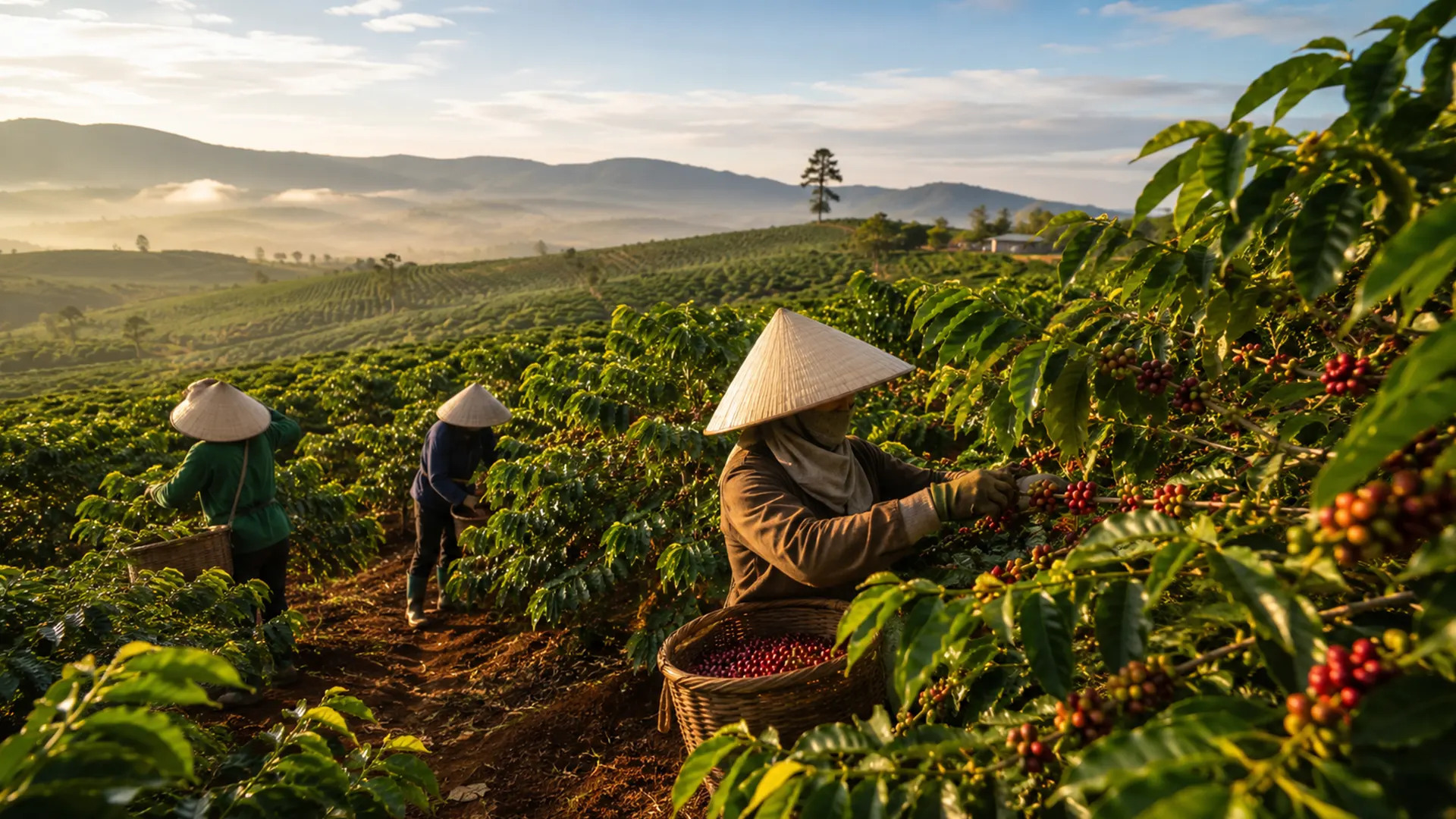
Buon Ma Thuot – Dak Lak
Buon Ma Thuot–Dak Lak coffee is a central sourcing option for international buyers seeking Vietnamese Robusta, commercial green coffee, blend components and specification-based supply programs. Located in Vietnam’s Central Highlands, Dak Lak is closely associated with the country’s coffee economy, while Buon Ma Thuot serves as an important commercial and processing hub for the surrounding production areas. The region is particularly relevant to importers, roasters, instant coffee manufacturers, distributors and private-label brands requiring dependable access to different Robusta grades and preparation standards.
Viet Coffee Source helps international buyers evaluate coffee from Buon Ma Thuot–Dak Lak according to origin, crop year, processing method, screen size, moisture, defect tolerance, cup profile, packaging and shipment requirements. We work with selected producers, processors and export partners in Vietnam. Coffee availability, supplier capacity, specifications and commercial terms are confirmed for each selected lot rather than assumed from the regional name alone.
Why Buyers Source Coffee from Buon Ma Thuot–Dak Lak
Dak Lak is one of the production areas most strongly associated with Vietnamese Robusta. Its established coffee supply chain makes the region relevant for buyers seeking commercial volumes, defined physical specifications and products suitable for several roasting and manufacturing applications.
Buyers may consider Buon Ma Thuot–Dak Lak coffee for:
- Commercial Robusta roasting programs
- Espresso blends requiring body, crema and intensity
- Instant coffee production
- Traditional Vietnamese coffee products
- Wholesale green coffee distribution
- OEM and private-label coffee projects
- Fine Robusta or differentiated regional lots, subject to availability
- Long-term sourcing programs based on approved specifications
Regional origin can provide useful sourcing context, but it does not replace lot-level quality control. Coffee collected from different districts, farms, harvest periods and processing facilities may vary in bean preparation, moisture, defects and sensory character. Buyers should therefore define measurable specifications and approve representative samples before confirming a shipment.
Robusta Production and Commercial Relevance
Robusta is the main commercial focus for many buyers sourcing from Dak Lak. It is used internationally in espresso blends, soluble coffee, dark-roast products and coffee lines designed to deliver stronger body and intensity. Depending on the grade and preparation, Dak Lak Robusta can be sourced for high-volume industrial use, mainstream roasted coffee or more selective quality programs.
The suitability of a particular lot depends on the buyer’s intended application. A manufacturer of soluble coffee may prioritize extract performance, commercial consistency and delivered cost. An espresso roaster may focus on body, crema, roast behavior and the absence of undesirable cup characteristics. A premium buyer may require tighter defect tolerances, larger screen sizes, controlled processing and more detailed traceability.
These different objectives should not be combined under a vague request for high-quality Robusta. A useful purchasing specification should explain how the coffee will be used and which physical or sensory criteria are essential.
Potential Cup Characteristics
Coffee from Buon Ma Thuot–Dak Lak is often selected for the strength, body and roast intensity commonly associated with Vietnamese Robusta. Depending on the lot, processing and roast development, the cup may show cocoa, dark chocolate, nutty, cereal, woody, earthy or spice-related characteristics. Some carefully prepared lots may offer greater sweetness, cleanliness and balance.
These descriptions are general possibilities rather than guaranteed flavor claims. Over-fermentation, poor drying, unsuitable storage or inconsistent preparation can negatively affect the cup. The actual profile must be evaluated through representative samples, physical analysis and cupping.
Buyers should communicate whether they require:
- A neutral commercial Robusta base
- Strong body for espresso blends
- High roast intensity
- Lower bitterness or cleaner finish
- Specific flavor exclusions
- Fine Robusta characteristics
- Consistency with a previously approved reference sample
Processing Methods
Processing method is an important purchasing criterion because it affects flavor, uniformity, physical appearance and price. Available methods depend on the selected supplier, crop conditions and lot preparation.
Natural or Dry-Processed Robusta
Natural processing is commercially important for Vietnamese Robusta. Coffee cherries are dried before the beans are separated from the fruit. When harvesting, drying and storage are properly managed, the method can support full body and a strong flavor profile. However, quality can vary if immature cherries, uneven drying or excessive fermentation are present.
Washed Robusta
Washed Robusta may be considered by buyers seeking a cleaner cup, more controlled preparation or a differentiated product line. Availability can be more limited than standard commercial natural Robusta and may affect pricing, minimum order quantity and production planning.
Polished and Additional Preparation
Polishing and other preparation options may be requested to achieve a particular visual appearance or commercial specification. Buyers should clarify whether polishing is a mandatory requirement or simply a preference, because visual improvement does not by itself confirm sensory quality.
Special preparation, sorting or processing requirements can be arranged based on buyer specifications and supplier capability. Final details must be confirmed during sample approval.
Grades, Screen Sizes and Physical Specifications
Buon Ma Thuot–Dak Lak Robusta may be offered under different grades and screen-size preparations. Commercial requests frequently refer to screen categories such as Screen 18, Screen 16 or Screen 13, but these terms alone are not sufficient to define a complete product.
A professional specification should also address moisture, defect count, foreign matter, black and broken beans, screen distribution and cup requirements. The definitions used by the buyer and supplier must be aligned before contracting because grade terminology can differ between companies and destination markets.
| Specification | Buyer Requirement |
|---|---|
| Coffee type | Robusta or another confirmed composition |
| Origin | Dak Lak, with more detailed sourcing-area information when available |
| Processing | Natural, washed, polished or another agreed preparation |
| Screen size | Defined according to the required screen distribution |
| Moisture | Measured and confirmed for the selected lot |
| Defect tolerance | Agreed using a clearly defined inspection method |
| Foreign matter | Maximum tolerance confirmed in the specification |
| Black and broken beans | Limits agreed according to grade and intended use |
| Crop year | Confirmed before commercial approval |
| Cup profile | Evaluated against buyer requirements or a reference sample |
| Packaging | Confirmed according to product and shipping plan |
Importers should avoid relying only on labels such as Grade 1, Grade 2 or premium. A complete specification and an approved sample provide a more reliable basis for quality control. Buyers can review additional purchasing criteria through our product specifications guidance.
Standard Commercial Robusta and Selective Lots
Not every buyer needs the same level of preparation. Standard commercial Robusta may be suitable for price-sensitive blends, soluble coffee or large manufacturing programs. More selective lots may require tighter physical limits, improved sorting, larger screen sizes, controlled processing or a more defined cup profile.
Fine Robusta should not be treated as a marketing label applied to any visually attractive coffee. Buyers interested in this category should evaluate sensory cleanliness, sweetness, balance, processing quality and traceability. Availability may be limited, and repeat supply should be discussed before the buyer builds a permanent product line around one sample.
Viet Coffee Source can help compare available options, but the final selection should always be based on the buyer’s own testing and approval criteria.
Sample Evaluation and Quality Approval
Representative samples are essential when sourcing from Buon Ma Thuot–Dak Lak. A quotation without an agreed specification and quality reference can create disputes regarding defects, cup profile or shipment consistency.
A typical sample approval process may include:
- The buyer submits the required coffee type, grade and intended application.
- Potential lots are identified according to current availability.
- A representative sample is prepared and dispatched.
- The buyer checks screen distribution, moisture, defects and appearance.
- The sample is roasted and evaluated through cupping or production testing.
- Feedback and required adjustments are communicated.
- The approved lot and final contract specifications are confirmed.
- A pre-shipment sample or verification process may be arranged when required.
The sample process should also clarify whether the approved sample represents a specific existing lot or a quality standard to be prepared later. This distinction is important when the requested volume exceeds the quantity represented by the original sample. More details are available on our samples and quality approval page.
Packaging Options
Green coffee packaging should be selected according to shipment volume, transit conditions, storage expectations and buyer preference. Available options may include traditional export bags, protective inner liners or other suitable formats. Exact bag material, weight and marking requirements are confirmed before production or loading.
Buyers should specify:
- Net weight per bag
- Outer bag type
- Inner-liner requirement
- Required bag markings
- Lot and crop identification
- Palletized or floor-loaded container preference
- Destination-country labeling requirements
Custom packaging for roasted coffee, retail coffee or private-label products follows a separate development process involving artwork, materials, pack size, valve requirements, language and destination-market compliance. These projects can be discussed through our OEM and private-label service.
Minimum Order Quantity and Container Planning
Minimum order quantity depends on the selected grade, processing method, packaging, supplier and whether the order is a standard export lot or a more specialized product. Smaller trial quantities may be possible in certain cases, while commercial green coffee programs generally require volumes that are practical for preparation and international shipping.
Container loading varies according to bag weight, packaging materials, pallet use and transport restrictions. The exact loading quantity must be calculated for the confirmed shipment rather than presented as a universal number.
Buyers requesting a quotation should provide:
- Estimated order quantity
- Expected annual or recurring demand
- Preferred shipment size
- Required packaging
- Destination port
- Requested Incoterm
- Target delivery period
This information helps determine whether the requirement should be handled as a trial shipment, full-container order, recurring supply program or consolidated purchase.
FOB, CIF and Export Coordination
Coffee from Dak Lak may move through different processing, storage and export channels before international shipment. The final quotation should identify the named port and the responsibilities assigned under the selected Incoterm.
FOB quotations typically require the buyer to manage the main ocean freight after loading at the named Vietnamese port. CIF quotations may include ocean freight and insurance to the agreed destination port. Other Incoterms can be discussed where commercially appropriate.
Freight costs, vessel schedules and transit conditions can change. Shipping terms and quotation validity should therefore be confirmed close to the planned booking date. Information about shipment preparation and documentation is available through our shipping and documentation service.
Export Documents
The document set depends on the coffee type, destination, Incoterm and importing-country requirements. A shipment may require a commercial invoice, packing list, bill of lading, certificate of origin, phytosanitary certificate, quality or weight documents and other destination-specific records.
Documentation support is available through selected export partners. However, buyers should provide their import requirements before contracting. Additional documents requested after cargo preparation may cause delays or extra costs if they were not included in the original agreement.
Traceability and EUDR Requirements
Traceability expectations differ between commercial blended lots, producer-group supply and farm-specific coffee. Buyers requiring detailed origin information should state the required level of traceability before samples and quotations are arranged.
For European Union shipments, EUDR-related requirements should be considered early in the sourcing process. The availability of geolocation data, supply-chain records and supporting documentation depends on the selected supplier and lot. No coffee should be described as EUDR-ready or compliant until the relevant information has been reviewed against the buyer’s due-diligence requirements.
Viet Coffee Source can coordinate requests for available traceability information and documentation support. Further details are provided on our EUDR support and traceability page.
How Viet Coffee Source Supports Buyers
Viet Coffee Source helps importers and professional coffee buyers identify sourcing options that match their required product, commercial application and destination market. For Buon Ma Thuot–Dak Lak coffee, support may include specification review, supplier coordination, sample arrangement, lot comparison, packaging discussion and export preparation.
Our role is not to claim that every regional lot meets the same standard. We help buyers compare available coffee using measurable requirements and a sample-based approval process.
Support can include:
- Robusta grade and screen-size matching
- Supplier and processor coordination
- Representative sample arrangements
- Physical and sensory specification clarification
- Packaging and loading discussions
- FOB or CIF quotation preparation
- Export-document coordination
- Traceability and EUDR information requests
- OEM and private-label project support
Request a Buon Ma Thuot–Dak Lak Coffee Quotation
To receive a relevant quotation, buyers should provide more than a general request for Dak Lak Robusta. The inquiry should include grade, screen size, processing method, moisture requirement, defect tolerance, expected volume, packaging, destination port and preferred Incoterm.
You can request a tailored wholesale coffee quotation for your current purchasing program. For questions about samples, specifications, packaging or export procedures, please contact Viet Coffee Source.
Availability, pricing and specifications depend on crop conditions, market movements, supplier availability and the selected lot. Final quality and commercial terms are confirmed through sample approval and contract documentation.