
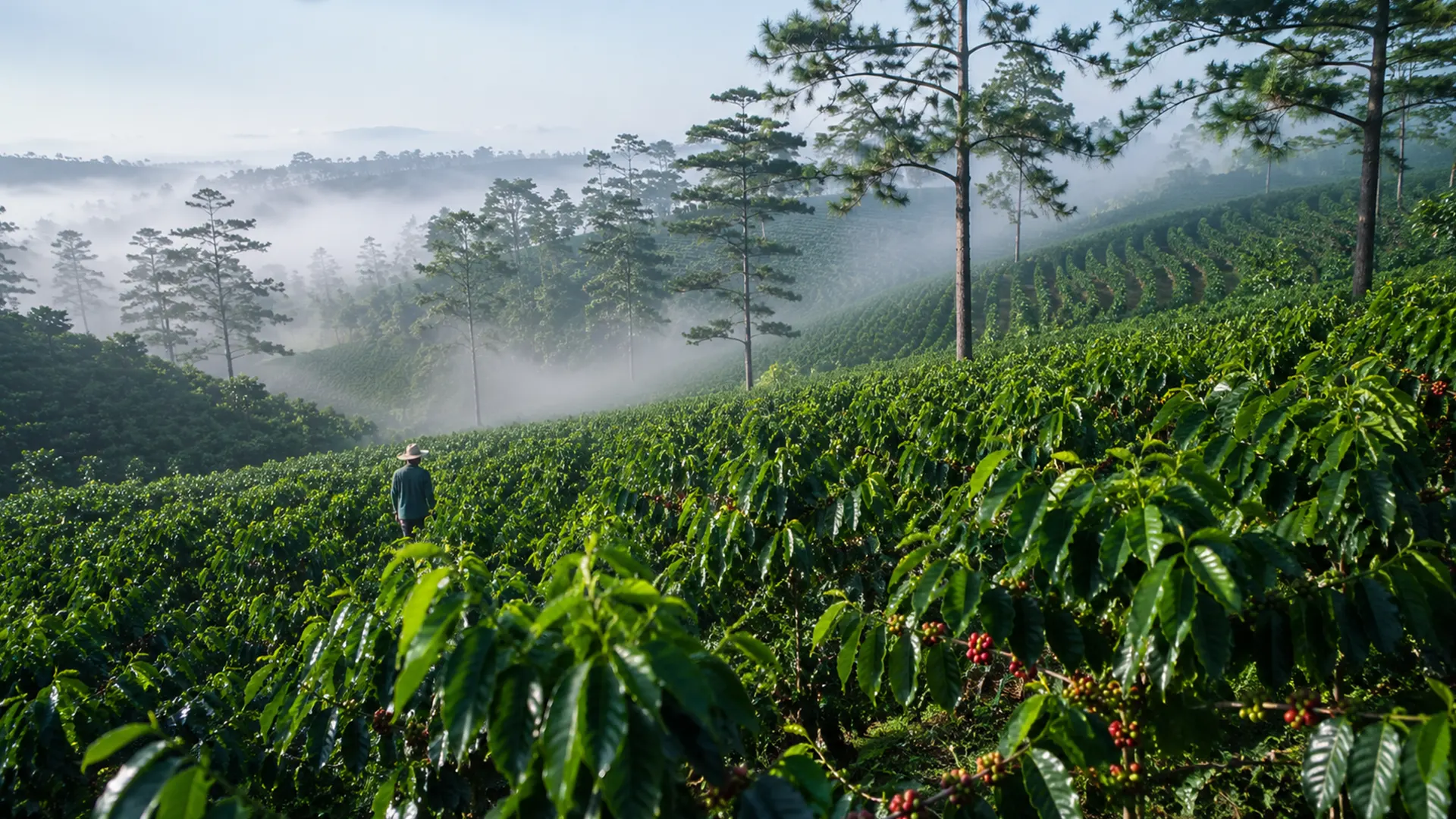
Da Lat – Lam Dong
Da Lat–Lam Dong coffee is an important sourcing option for international buyers seeking Vietnamese Arabica, differentiated regional lots and coffees suitable for specialty, premium commercial and origin-focused product lines. Located in Vietnam’s Central Highlands, Lam Dong includes elevated production zones with cooler growing conditions than many of the country’s major Robusta regions. Areas around Da Lat, including Cầu Đất, are particularly associated with high-grown Arabica production and attract interest from roasters looking for a distinct Vietnamese origin.
Viet Coffee Source helps importers, roasters, distributors and coffee brands identify Da Lat–Lam Dong coffees according to their target cup profile, processing method, physical specifications, volume requirements and destination market. We work with selected producers, processors and export partners in Vietnam. Final availability, specifications, sample approval and commercial terms are confirmed for the selected lot.
Why Buyers Source Coffee from Da Lat–Lam Dong
Vietnam is internationally known for Robusta, but Da Lat and the wider Lam Dong province provide buyers with access to a more varied sourcing environment. Higher production areas are suitable for Arabica cultivation, while lower and warmer parts of the province may also produce Robusta and other commercially relevant coffee types.
This diversity allows buyers to evaluate the region for several purchasing objectives:
- Vietnamese Arabica for single-origin or regional coffee ranges
- Arabica components for espresso and filter coffee blends
- Washed, natural or other processing options, subject to lot availability
- Premium commercial coffee with defined physical and sensory requirements
- Traceable lots for buyers requiring clearer origin and supply-chain information
- Custom sourcing projects based on roast profile, brewing method or target market
Da Lat–Lam Dong should not be treated as one uniform flavor category. Altitude, variety, harvest maturity, farm practices, processing method, drying conditions, storage and lot preparation can all influence the final result. Professional buyers should therefore evaluate individual samples and specifications rather than relying only on the regional name.
Arabica Production in the Da Lat Highlands
The elevated areas surrounding Da Lat are among Vietnam’s most recognized Arabica-producing zones. Cooler temperatures and highland conditions can contribute to slower cherry development compared with hotter lowland regions. Depending on the variety, farm, processing method and crop conditions, coffees from the area may present balanced acidity, moderate sweetness, fruit-related notes, floral characteristics, chocolate tones or a clean finish.
These descriptions are general regional references rather than guaranteed cup results. The actual sensory profile must be confirmed through representative samples, cupping and pre-shipment approval. Buyers developing a specific flavor target should provide clear requirements, including preferred acidity, body, sweetness, roast application and acceptable defect level.
Common Commercial Applications
Da Lat–Lam Dong Arabica can be considered for a range of commercial uses:
- Single-origin roasted coffee
- Vietnamese Arabica retail lines
- Espresso blends requiring aroma and acidity
- Filter coffee and pour-over products
- Hotel, restaurant and café supply programs
- Private-label and OEM coffee projects
- Specialty or premium commercial product ranges
The appropriate grade and lot depend on the buyer’s product positioning. A specialty-focused roaster may prioritize cup score, traceability and processing detail, while a larger commercial buyer may focus more heavily on consistency, volume, screen distribution, defect tolerance and price stability.
Varieties and Lot Selection
Arabica cultivation in Lam Dong may include Catimor and other Arabica varieties, depending on the production area and supplier. Variety information should be confirmed at lot level because regional shipments can differ in composition. Buyers requiring a single variety, controlled blend of varieties or detailed farm-level traceability should state this requirement before samples are arranged.
Lot selection may be based on several factors:
- Specific production area or district
- Altitude range
- Arabica variety
- Processing method
- Harvest period and crop year
- Screen size and bean appearance
- Moisture and physical preparation
- Cup profile and intended roast application
- Traceability and documentation requirements
Some requirements can be arranged only when suitable coffee is available. Final specifications are confirmed during sample approval and before the commercial contract is completed.
Processing Methods
Processing has a major influence on the character and consistency of Da Lat–Lam Dong coffee. Available methods depend on the producer, processor, harvest conditions and selected lot.
Washed Arabica
Washed processing is commonly evaluated by buyers seeking cleaner acidity, clearer flavor separation and more predictable roast development. Quality depends on cherry selection, fermentation control, washing, drying and storage. Buyers should request information about the processing method and evaluate the cup before confirming an order.
Natural Arabica
Natural processing can produce more pronounced fruit character, sweetness and body, although results vary significantly according to cherry maturity and drying control. Natural lots should be assessed carefully for fermentation character, uniformity and consistency.
Honey and Experimental Processing
Honey or other controlled processing styles may be available from selected suppliers. These coffees are generally more limited and may require flexible purchasing volumes. Buyers interested in experimental lots should confirm availability, processing details and reproducibility before building a permanent product line around them.
Typical Buyer Specifications
There is no single specification that applies to every Da Lat–Lam Dong coffee. The following table shows the main criteria normally discussed during a professional sourcing process.
| Specification | Buyer Consideration |
|---|---|
| Coffee type | Arabica, Robusta or a defined composition confirmed for the selected lot |
| Origin | Lam Dong province, with more specific production-area information when available |
| Variety | Confirmed according to supplier and lot documentation |
| Processing method | Washed, natural, honey or another method, subject to availability |
| Screen size | Specified according to buyer requirements and lot preparation |
| Moisture | Measured and confirmed for the selected lot |
| Defect tolerance | Agreed according to grade, contract and sample approval |
| Crop year | Confirmed before contracting |
| Cup profile | Evaluated through representative samples |
| Packaging | Options arranged according to product, volume and shipping requirements |
| Traceability | Level of detail depends on the selected supplier and lot |
Importers should provide measurable requirements wherever possible. Terms such as premium, clean or high quality can be interpreted differently. Clear parameters reduce misunderstandings and make supplier comparison more effective.
Sample and Quality Approval Process
Samples are an essential part of sourcing coffee from Da Lat–Lam Dong. A regional description alone is not enough to approve a commercial purchase. The buyer should evaluate physical appearance, moisture, defects, aroma, cup profile and roast performance.
A typical approval process may include:
- The buyer provides the required product type and specifications.
- Available lots are reviewed with selected suppliers or processors.
- A representative sample is arranged, subject to availability.
- The buyer conducts physical analysis, sample roasting and cupping.
- Feedback and required adjustments are communicated.
- The final lot, specifications, volume and commercial terms are confirmed.
- Pre-shipment verification can be arranged when required.
For buyers creating a repeat program, retaining approved reference samples can help compare future shipments. Crop variation should still be expected because coffee is an agricultural product.
Packaging and Export Preparation
Packaging requirements depend on the coffee type, shipment size, destination and buyer preference. Green coffee may be prepared in traditional export bags, bags with protective liners, vacuum packaging or other formats where commercially suitable and available.
Before confirming packaging, buyers should consider:
- Required bag weight
- Outer bag material
- Inner-liner requirements
- Marking and lot identification
- Palletized or floor-loaded shipment
- Container utilization
- Humidity and transit conditions
- Destination-country labeling rules
Packaging options and container loading plans are confirmed according to the selected coffee, total volume and export arrangement. Private-label roasted coffee packaging can also be discussed separately through our OEM and private-label sourcing service.
Minimum Order Quantity and Commercial Terms
Minimum order quantity is not fixed for every Da Lat–Lam Dong product. It depends on whether the buyer requires green coffee, roasted coffee, a microlot, a commercial grade, custom packaging or a consolidated shipment. Smaller trial quantities may be possible for selected products, while standard export shipments generally require commercially practical volumes.
Quotation preparation normally requires the following information:
- Required coffee type and grade
- Estimated order volume
- Preferred processing method
- Target cup profile
- Packaging format
- Destination country and port
- Requested Incoterm, such as FOB or CIF
- Required certification or traceability level
- Expected purchasing schedule
Prices vary according to crop conditions, market movements, quality, processing, volume, packaging and logistics. A valid commercial quotation should therefore be based on a clearly defined specification and current availability.
Traceability and EUDR Support
Traceability requirements are becoming increasingly important for international coffee buyers. The level of information available can differ between regional commercial lots, producer-group lots and farm-specific coffees. Buyers requiring detailed supply-chain records should communicate their needs at the beginning of the sourcing process.
For European Union buyers, EUDR-related data and documentation requirements should be reviewed before a lot is approved. Documentation support may be available depending on the selected supplier, producer network and supply chain. No lot should be assumed to meet a particular regulatory or certification requirement until the required records have been reviewed and confirmed.
More information about sourcing controls, specifications and documentation is available in our quality and compliance section.
Export Documents and Shipping
Export documentation depends on the product, destination country, shipment structure and agreed Incoterm. A coffee shipment may require commercial and logistics documents such as a commercial invoice, packing list, bill of lading, certificate of origin, phytosanitary documentation or other destination-specific records.
Required documents must be confirmed before contracting because import rules vary by country and product form. Documentation support is available through selected export partners, but the final document set depends on the shipment and buyer’s import requirements.
Shipping can be discussed under FOB, CIF or another mutually agreed Incoterm. The quotation should clearly identify the named port, packaging basis, loading quantity, document responsibilities and validity period.
How Viet Coffee Source Supports Buyers
Viet Coffee Source connects international buyers with suitable coffee sourcing options in Vietnam. For Da Lat–Lam Dong requirements, our role may include reviewing buyer specifications, identifying potential suppliers, coordinating samples, comparing available lots and supporting communication through the quotation and export preparation process.
We do not assume that every coffee from the region will meet every buyer’s needs. Our objective is to match commercial requirements with available lots and help buyers evaluate them using clear specifications and sample-based approval.
Support can include:
- Product and origin matching
- Supplier and processor coordination
- Sample arrangement
- Specification clarification
- Packaging discussion
- OEM and private-label coordination
- Export-document support
- FOB or CIF quotation preparation
- Traceability and EUDR-related information requests
Request a Da Lat–Lam Dong Coffee Quotation
Buyers interested in Da Lat–Lam Dong coffee should provide detailed purchasing requirements rather than requesting a general price. Coffee type, processing method, grade, screen size, defect tolerance, volume, packaging, destination port and Incoterm all affect the available options and quotation.
To discuss a current requirement, request a tailored coffee quotation. For general questions about origin selection, samples or export procedures, you may also contact Viet Coffee Source.
Availability depends on origin, crop season, lot preparation and supplier capacity. Final specifications and commercial terms are confirmed after sample evaluation and buyer approval.