
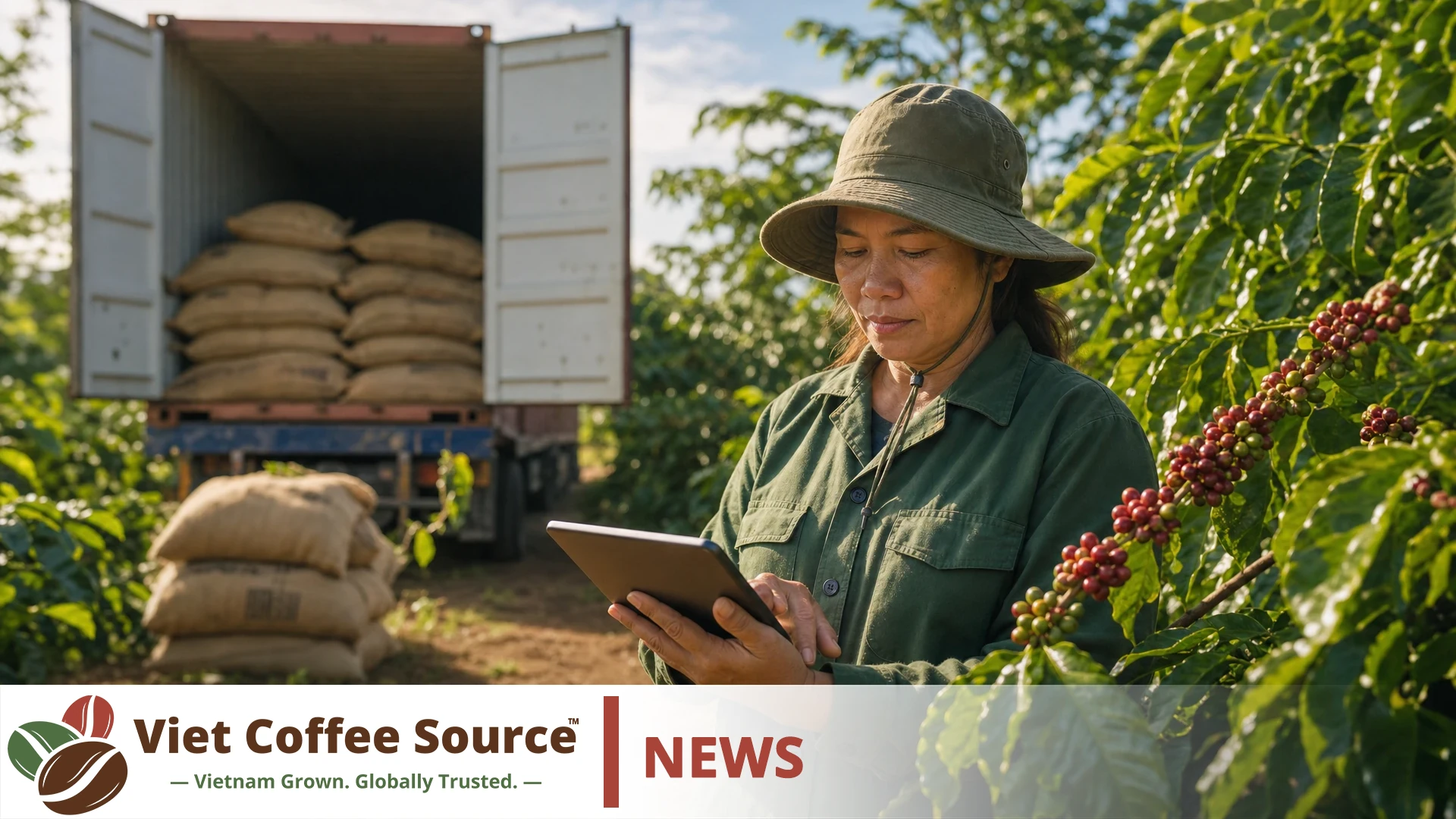
EUDR Scramble Shifts Vietnam Robusta Flows, Compliant Exporters Win EU Demand
EUDR Enforcement Reshapes Vietnam’s Robusta Trade
Practical Procurement Checklist for EU-Facing Buyers
To convert the article’s implications into a working procurement plan, buyers should adopt a short checklist that aligns commercial terms with EUDR realities. Start by asking suppliers for strong documentary proof: plot-level geolocation data, supplier declarations, chain-of-custody records and completed risk assessments. Prioritise exporters already using farm registries, GPS plot data and third-party verification; these suppliers have demonstrably lower time-to-market for EU consignments.
Contract and cost allocation: Amend purchase contracts to require EUDR documentation as a condition of delivery, and clearly assign responsibility for audit and traceability costs. Expect premium pricing on verified lots and budget for compliance-related pass-throughs. Build clauses for extended lead times and force majeure relating to verification delays.
Logistics and timing: Add buffer time to procurement calendars to accommodate data collection and third-party audits. Coordinate with logistics partners experienced in EU entry requirements to avoid customs refusals. Consider multi-sourcing: secure a core volume from EUDR-ready exporters and supplement with alternative origins for flexibility, while recognising non-compliant volumes may be rerouted to Asia or MENA.
Supplier development: Where strategic, fund or co-invest in supplier capacity-building programs supported by provincial authorities or industry projects. That preserves long-term access to verified Robusta and can reduce price volatility compared with spot purchases of scarce compliant lots.
The recent acceleration of enforcement around the EU Deforestation Regulation (EUDR) has become the defining commercial development for Vietnamese Robusta exporters and their international buyers. Importers, roasters, wholesalers and private-label brands sourcing Robusta for the EU are now seeing a bifurcated supplier landscape: exporters who can demonstrate plot-level traceability and robust due diligence are being awarded business and commanding a market advantage, while less-prepared suppliers face restricted access, re-routing of shipments and lengthened timelines.
Why This Matters For EU-Facing Buyers
The EU remains a major destination for Vietnamese Robusta. Under EUDR, companies placing coffee on the EU market must provide evidence that the coffee was not produced on land deforested after December 31, 2020. That documentary burden—risk assessments, supplier declarations, geolocation data and chain-of-custody records—has shifted from a distant compliance concern into a near-term sourcing constraint. For buyers, the immediate consequence is a tightening of EUDR-compliant supply and a practical need to re-evaluate contracts, delivery schedules and verification workflows.
Commercial Effects: Pricing, Availability and Logistics
Market signals are already emerging. Exporters who completed due-diligence and traceability steps report winning EU business that less-prepared competitors can no longer serve. That dynamic produces three clear commercial effects: a premium for compliant lots, tighter availability of verified cargoes for EU delivery windows, and increased transaction friction due to added documentation and potential third-party audits. Non-compliant volumes are likely to be redirected to alternative markets in Asia and the MENA region, amplifying short-term supply pressure in EU channels.
Practical Actions Buyers Should Take Now
For practical sourcing resilience, buyers must move from passive observation to active mitigation. Recommended immediate actions include:
- Prioritise suppliers that can provide plot-level traceability, supplier declarations and documented risk assessments.
- Amend contracts to require EUDR documentation and assign cost responsibility for audits and traceability services.
- Secure compliant lots early, accept longer lead times, and consider multi-sourcing to spread allocation risk.
- Invest in supplier capacity-building or partner with exporters who already run verification programs.
- Budget for premium pricing on verified Robusta and for compliance-related costs passed through the supply chain.
What Exporters Are Doing—and What Buyers Should Ask For
Proactive exporters are integrating farm registries, GPS plot data and third-party verification into their export documentation. Provincial authorities, donor projects and industry programs are supporting traceability rollouts in key coffee-growing regions to help meet the EUDR standard. Buyers should request demonstrable evidence: supplier risk assessments, georeferenced origin data, supplier declarations, and any third-party verification reports. These documents are the practical tokens of market access—without them, EU customs or downstream buyers may refuse consignments.
Due Diligence: Timing, Cost And Audit Exposure
Due diligence takes time and money. Collecting farm-level data, running backward traceability checks and commissioning verifications add lead time ahead of shipment and create audit exposure for both exporters and importers. Commercial teams must therefore build buffer time into procurement schedules, accept that price negotiations will include compliance cost recovery, and be prepared to support supplier investments where long-term partnerships are strategic. For short-term hedges, buyers can prioritise exporters already classed as low risk by national systems or those with documented EUDR-ready processes.
Supply Chain Planning For Roasters And HORECA Chains
Roasters, HORECA chains and private-label buyers should treat EUDR compliance as an operational prerequisite for EU market continuity. That means integrating EUDR clauses into purchasing terms, aligning quality control with traceability checks, and coordinating logistics partners who understand documentation requirements at EU entry points. Where possible, traders should source a portion of their needs from exporters that advertise EUDR readiness while converting remaining requirements into longer-term contracts that fund supplier traceability upgrades.
Commercial Opportunity: Capture Market Share With Verified Supply
While compliance brings cost and complexity, it also presents commercial opportunity. Suppliers that can reliably deliver verified, deforestation-free Robusta for the EU will be positioned to secure premium pricing and steadier contracts. Buyers who prioritise these suppliers can protect brand access to EU channels and advertise stronger sustainability credentials. For B2B customers, committing to verified supply chains can differentiate a product in crowded markets and reduce the risk of disruptive re-routing.
Vietnam’s exporters and provincial authorities are rapidly scaling systems to meet EUDR requirements. For importers and roasters seeking stable EU supply, the practical next step is to prioritize EUDR-ready partners and to formalise sourcing, pricing and verification expectations in contracts. For guidance on Vietnam’s export processes and quality assurance, consult our export resources and compliance overview and explore origin dossiers to align sourcing plans with verified supply. When you are ready to secure compliant Robusta inventory, contact our wholesale team to discuss available lots and documentation requirements.
Export GuidanceQuality & ComplianceVietnam OriginsStart A Wholesale Inquiry