
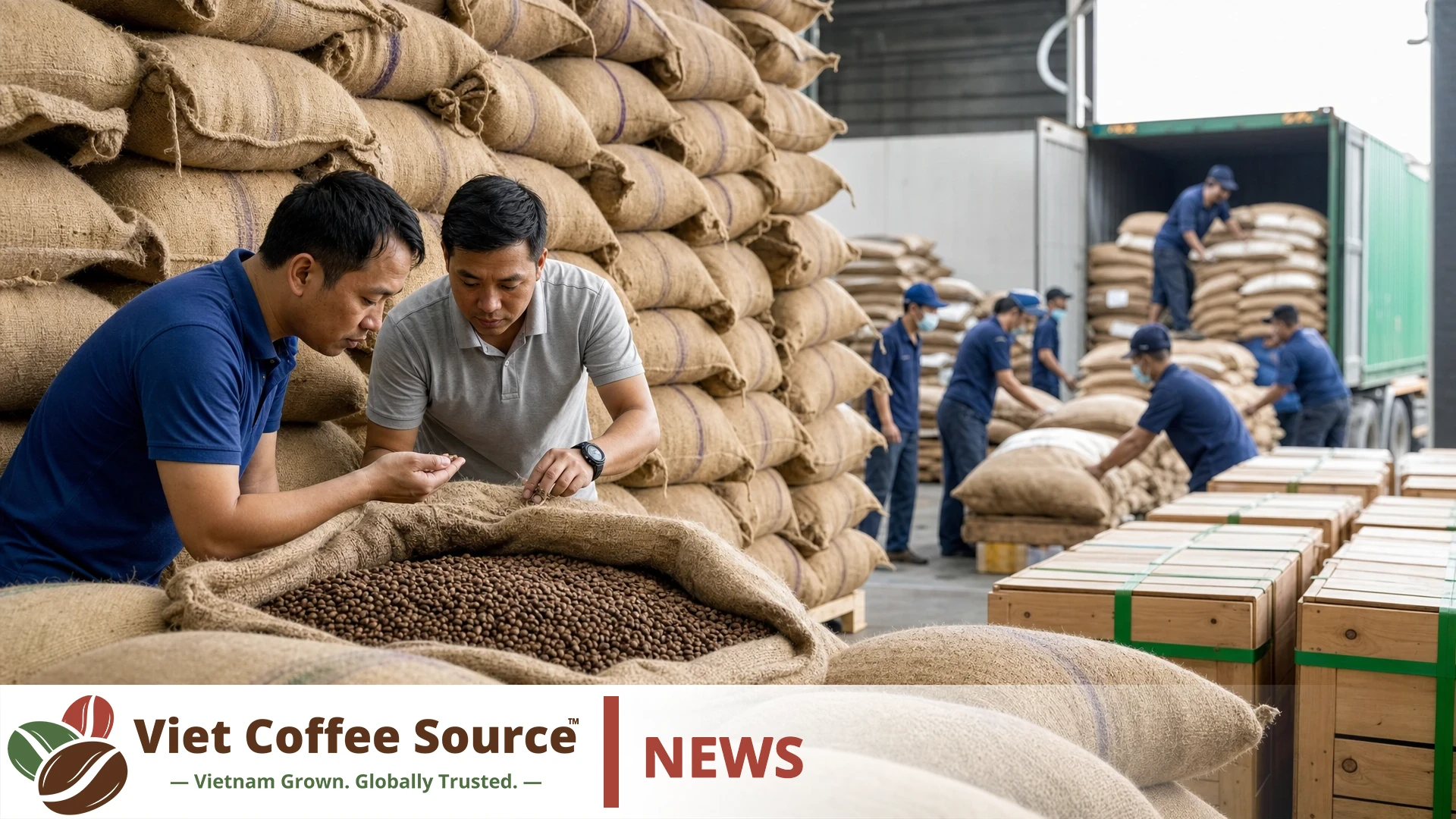
July Robusta Shipment Surge Lowers Export Prices While Buyers Shift To EUDR‑Compliant Sourcing
July Volume Surge Meets Falling Export Prices
Negotiation Tactics for Contracts
With July showing a 44.4% YoY volume jump and average export prices down about 20.4% YoY to their lowest since June 2024, buyers can press for better commercial terms while protecting margins. Consider dividing purchases into a near‑term spot tranche to capture lower landed costs and a forward tranche with clear price adjustment mechanisms tied to Robusta futures and local settlement references. Strong contractual language should define EUDR‑ready documentation, timelines for supplier evidence submission, remedies for non‑compliance, and allocation of verification costs.
For EU‑bound business, emphasise clauses that require evidence of origin and traceability to meet EUDR requirements effective for contracts performed from October 1, 2026. For non‑EU destinations, include the same documentation standards where possible to maintain flexibility and access to private‑label and premium channels.
Operational Checklist for Immediate Orders
Operationally, coordinate logistics early: book vessels and containers ahead of peak demand windows, schedule pre‑shipment inspections, and specify quality tests such as moisture, screen size and screen verification. Higher outbound volumes may ease availability but can increase the risk of mixed lots and wider quality variance; insist on inspection certificates and clear packing lists.
- Secure short‑term volume with EUDR documentation clauses.
- Schedule pre‑shipment inspection and moisture testing.
- Define price adjustment and settlement references in contracts.
These steps let buyers capture the current cost advantage while reducing the compliance and operational risks that could disrupt EU shipping or premium market access.
Vietnam reported a pronounced increase in coffee shipments in July, driven largely by Robusta exports. Official reporting cited a 44.4% year‑on‑year rise in export volume for the month while average export prices fell about 20.4% YoY to their lowest level since June 2024. For international buyers—importers, roasters, wholesalers and HORECA chains—this combination produces both immediate buying opportunities and near‑term sourcing complexity.
What The Numbers Mean For Sourcing And Pricing
The volume spike suggests stronger physical availability from Vietnam’s supply chain in the short term, which can translate into more competitive spot offers and easier fulfilment of late summer and early autumn deliveries. At the same time, the sharp price decline reflects market pressure on realised export values: buyers who move now can access lower landed costs, but forward pricing and contract negotiations need careful structuring to avoid unwanted basis or margin exposure as global fundamentals evolve.
Regulatory Pressure: Buyers Demand EUDR‑Compliant Coffee
Concurrently, buyer behaviour is shifting. Industry reporting indicates that many European and international purchasers are requesting EUDR‑compliant documentation for contracts to be performed from October 1, 2026. For B2B buyers this is not a peripheral preference; it will be a contractual and operational requirement for EU‑bound shipments and a commercial differentiator elsewhere. EUDR compliance elevates traceability demands, jurisdictional risk assessment and supply chain due diligence.
Immediate Commercial Actions For Buyers
Buyers should treat the current market as a two‑pronged opportunity: secure attractive spot or short‑term volumes now while simultaneously upgrading contractual and compliance frameworks. Practical steps include revising purchase agreements to specify EUDR‑ready documentation, adding traceability and deforestation risk clauses, and including clear price adjustment mechanisms to manage short‑term volatility.
Logistics, Quality And Operational Risks
Higher outbound volumes from Vietnam in July may ease immediate availability, but logistics capacity and quality variability remain practical risks. Seasonal harvest cycles, vessel schedules and container availability can tighten quickly. Sellers moving volume to preserve cashflow may offer mixed lots or wider quality variances. Buyers should budget for pre‑shipment inspection, screen size verification and moisture testing, and coordinate inland collection and booking well ahead of required shipment windows.
How To Prepare For EUDR Compliance
For EU importers, EUDR compliance means evidence of origin, supply chain traceability, and assessments that mitigate deforestation risk. Practical vendor actions include initiating supplier audits, collecting chain‑of‑custody documentation, and exploring certification or jurisdictional sourcing arrangements. If a buyer lacks internal capacity, consider third‑party providers or working with exporters who already publicise EUDR‑ready practices.
Contract clauses to consider now include: definitions of acceptable documentation, timelines for supplier evidence submission, remedies for non‑compliance, and allocation of costs for additional auditing or verification. These elements reduce the risk of shipment rejection, fines, or delayed customs clearance when EUDR enforcement becomes active.
Price management measures are equally important. Incorporate price adjustment windows or reference pricing tied to recognised benchmarks such as Robusta futures and local exchange settlements. This limits margin erosion if spot prices rebound or if global crops change the supply balance.
Destination Markets And Strategic Sourcing
Top destination markets continue to include major EU buyers alongside fast‑growing demand from China and key Asian buyers. Buyers focused on Europe must prioritise EUDR readiness; those supplying non‑EU markets nonetheless benefit from stronger traceability, which can ease access to premium channels and private‑label contracts. Consider diversifying by origin, split shipments, or staggered delivery schedules to balance cost savings from current spot prices with the need for stable, compliant supply.
Practical Procurement Checklist
- Secure short‑term volume where advantageous, but attach EUDR‑ready documentation requirements.
Keep in mind that only one short list is provided here; buyers should expand internal checklists to cover inspection, logistics booking and contract remediation.
Market Signals And Next Steps
The current signal from Vietnam—large July volumes and lower export prices—creates a narrow window for cost‑efficient sourcing. However, the approaching EUDR enforcement date and continuing global crop signals mean buyers who act must combine tactical buys with structural compliance upgrades. Start supplier conversations now to lock volume and documentation, and schedule pre‑shipment inspections and logistics bookings to avoid last‑minute squeezes.
For buyers that need to assess origin and export mechanics, our export insights page explains Vietnamese export procedures and typical contractual terms. For guidance on compliance and traceability processes, review our resources on quality and regulatory preparation. If you want direct assistance sourcing EUDR‑ready Robusta or to discuss available lots and documentation, contact our team for tailored offers and logistics planning through a wholesale inquiry.
Export InsightsQuality & ComplianceVietnam OriginsStart A Wholesale Inquiry