
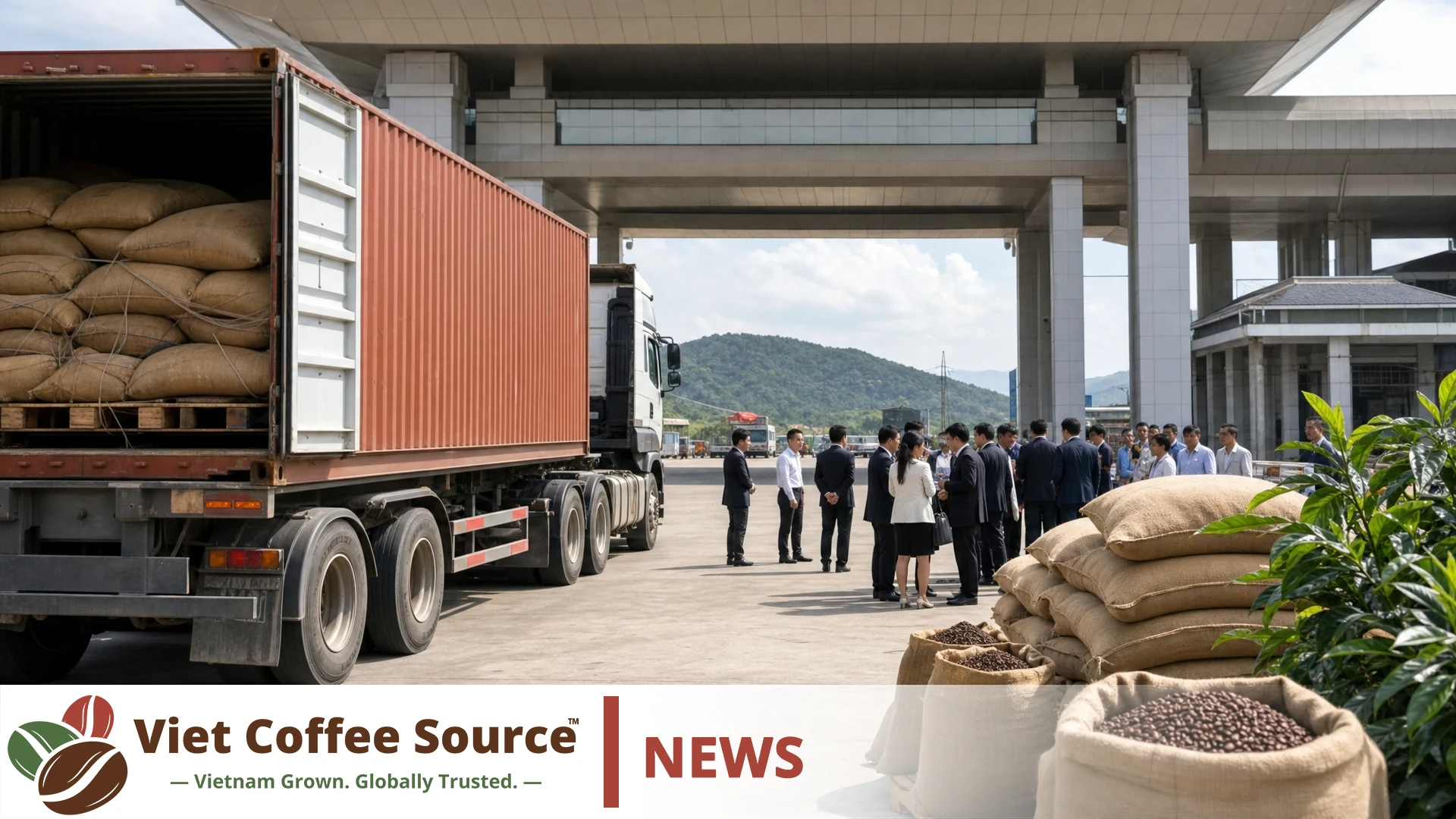
Yunnan Conference Sparks China Demand And Faster Cross‑Border Coffee Trade
Why The Yunnan Business Matching Conference Matters Now
The standout development for exporters and buyers over the past 30 days is the China–Vietnam Coffee Business Matching Conference in Yunnan, combined with linked promotional roadshows in Shanghai and planned events in Guangzhou. Reports from Vietnamese trade media and industry groups describe not only a clear near‑term uptick in Chinese purchases of Vietnamese coffee, but also a coordinated on‑the‑ground effort to improve cross‑border logistics, optimise customs clearance at border gates and actively introduce roasted and specialty Vietnamese coffees directly to Chinese roasters, distributors and private‑label buyers.
Confirmed Market Signals From Recent Trade Data
Multiple Vietnamese outlets have documented sharp increases in Chinese imports of Vietnamese coffee in the first five months of 2026. That near‑term buying surge creates real commercial momentum: demand is rising for both bulk green lots and higher‑value processed formats. For importers, roasters and wholesalers in China who need consistent supplies, this is a market signal to engage sooner rather than later with reliable Vietnamese partners who can meet quality and delivery expectations.
What Improved Cross‑Border Logistics Mean For Buyers And Exporters
Conference reporting emphasised practical measures — faster clearance at border gates, improved road and rail connectivity into Yunnan, and policy support to shorten delivery times and reduce costs. For exporters this can translate into shorter lead times and lower handling risk when shipping to South‑West China. For Chinese buyers, especially roasters, café chains and HORECA distributors who value predictable replenishment, the logistics improvements make Vietnamese suppliers more competitive for just‑in‑time or smaller, higher‑frequency lots compared with longer maritime routes.
Product Mix: Bulk Green Versus Roasted And Specialty
While volume purchases remain important, recent trade promotion activity in Shanghai and planned events in Guangzhou deliberately highlighted roasted, single‑origin and specialty Vietnamese coffee. This dual focus — bulk green for commodity channels and roasted/specialty for value channels — creates a two‑track commercial opportunity. Exporters that can offer traceability, consistent grading and roasted or semi‑processed product options will be able to address Chinese demand across both ends of the market.
Practical Steps For Exporters To Capture The Opportunity
Exporters should prioritise three practical areas to convert the opportunity into sales: supply chain reliability, product differentiation and commercial outreach. First, confirm logistics and customs pathways that reduce lead time into Yunnan or coastal Chinese gateways. Second, invest in traceability, clear grading and small‑lot roasted services or packaging suitable for private‑label retail. Third, follow up on trade matching contacts made at conferences and roadshows with samples, CIF/FOB terms and pilot orders to secure initial contracts.
What Distributors, Roasters And Private‑Label Buyers Should Do
For Chinese distributors and roasters the message is actionable: engage Vietnamese partners that can demonstrate quality control and reliable transit options into China. Where speed matters, consider testing JIT or higher‑frequency shipments of green beans through Yunnan routes. For private‑label and HORECA buyers looking for roasted products, the recent Shanghai introductions offer a pathway to source finished goods directly from Vietnamese roasters or co‑packing partners — but buyers should insist on pre‑shipment samples and clear lead‑time agreements before scaling distribution.
Operational diligence is essential. Confirm customs responsibilities, expected clearance times at nominated border gates and contingency plans for seasonal or weather disruptions. Where exporters advertise improved clearance, buyers should request documented service level expectations or references from other Chinese customers.
Commercial Differentiation Will Drive Wins
As Vietnam’s market share in China rises, competition among Vietnamese suppliers will intensify. Exporters who differentiate on traceability, certified specialty lots, branded roasted SKUs and flexible packaging will be better positioned. Private‑label buyers should prioritise partners that offer design and labelling flexibility, minimum order quantities aligned with test launches and the ability to scale production while maintaining consistent roast profiles and quality.
Risks And Negotiation Tips For B2B Contracts
Buyers should negotiate clear contract clauses for lead times, quality acceptance, sampling protocols and liability for customs delays. Exporters must be transparent about shipment itineraries and any intermediary handling. Where faster border clearance is promoted, include acceptance criteria and remedies if shipments are delayed beyond agreed windows. For both sides, pilot orders with explicit acceptance procedures reduce commercial friction and create a basis for longer‑term contracts.
How To Follow Up And Source Vietnamese Supply
Companies looking to respond to this development can start by mapping Vietnamese suppliers with export experience into China and by requesting product dossiers and logistics plans. Use trade events and the recent business matching contacts to secure samples and to evaluate roasted prototypes or private‑label packaging. For exporters unfamiliar with Chinese distribution channels, partnering with established Chinese importers or logistics providers specialising in Yunnan and South‑West China can accelerate market entry.
For readers seeking assistance with sourcing, quality and export processes, our platform highlights Vietnamese origins and export services to facilitate commercial matches and compliance. Review our export guidance to align your product and logistics planning, and contact our wholesale team to discuss orders, samples and Chinese market logistics.
See export servicesand quality compliancefor Vietnam origins. Ready to source or sell into China? Start a commercial conversation at /wholesale-inquiry.