
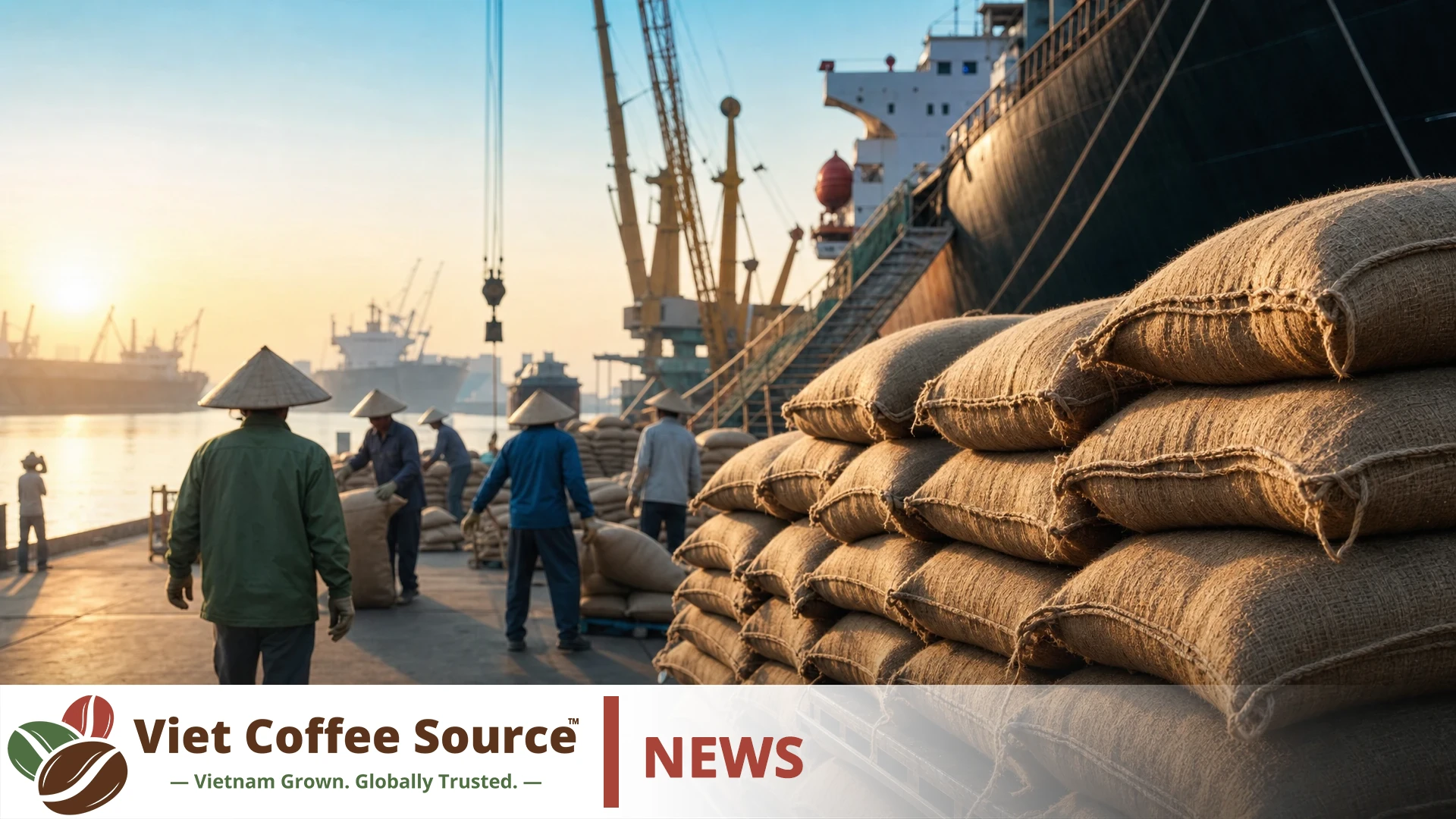
Vietnam H1 2026: Higher Robusta Volumes But Falling Export Values — What Importers Should Do Now
H1 2026 Snapshot: More Coffee Out, Less Revenue In
Official trade bulletins and industry reporting show a clear commercial signal: Vietnam shipped higher volumes of coffee in early 2026 while export revenues declined because average FOB prices fell year‑on‑year. For international buyers this is the strongest near‑term development affecting sourcing, pricing and logistics. The net effect is a window where physical supply is available and headline prices are lower, but quality segmentation and prompt premiums are becoming decisive for commercially acceptable deliveries.
Why This Matters For International Buyers
Importers, roasters, wholesalers and private‑label brands should treat the H1 picture as actionable market news, not simply macro commentary. Larger export volumes mean exporters are willing to move stock now; lower average export prices reduce the headline cost of Robusta lots. However, reported declines in average export earnings reflect weaker per‑tonne prices overall and a shift in the market toward paying up for clean, shipment‑ready lots. Buyers who assume all Robusta is fungible risk receiving mixed or lower‑grade cargo at lower headline prices.
Quality Premiums And Specification Risk
Market notes from exporters and trade pages indicate prompt differentials for well‑graded, low‑defect Robusta have firmed in late June–July. That means the cheapest FOB line on a price sheet may not buy the cup profile or defect counts you need. Commercial buyers should insist on clear specification clauses: screen size, moisture, defect counts, and inspection/COA terms. Where possible, request photographs and third‑party inspection at origin before loading to avoid disputes that erode any apparent savings.
Timing: Lock Good Lots Now Or Hedge For The New Crop
Vietnam’s main new crop typically arrives around October. The current surplus of shipment‑ready lots provides an opportunity for spot fills, short‑term replenishment for seasonal programs, or to lower immediate blend costs. At the same time, buyers needing continuity into Q4 should split strategy: secure a portion of supply now under clear quality and delivery terms and negotiate forward contracts for October‑onward deliveries with acceptance and inspection clauses tied to harvest quality.
Logistics, Container Availability And Cost Considerations
Higher export flows in H1 2026 show exporters are moving volume, but logistics remain a practical constraint. Buyers must confirm container availability, loading windows, vessel schedules and origin inspection timelines. Exporters are protecting margins by prioritising prompt shipments and demanding premiums for immediate allocation; late changes or inspection delays can trigger demurrage and quality compromises. Make contingency plans for inspection days, and factor potential premium freight or shorter lead times into landed cost calculations.
Destination Markets And Compliance Requirements
The primary destinations for Vietnamese coffee—EU, China and Japan—remain commercially important and demand different documentation, traceability and sustainability credentials. Importers servicing the EU should continue to prioritise traceability and risk management as market conversations about EUDR and sustainability persist. Sellers that can provide verifiable origin documentation and recognized sustainability certifications often secure better access and premiums in those markets. For buyers, vetting compliance documentation early in the transaction reduces the risk of downstream rejections or costly adjustments.
Commercial Sourcing Tactics For Buyers
Given the current dynamic, practical sourcing tactics include: (1) negotiating spot FOBs for immediate, well‑specified lots where inspection and clean COAs are available; (2) contracting a portion of required volumes forward into October‑Q4 with clear quality acceptance terms; and (3) building buffer inventory for private‑label or HORECA programs where blend consistency is critical. Where possible, obtain seller confirmations that differentiate prompt differential treatments for clean lots versus mix‑grade cargo.
Price And Contract Terms To Watch
When drafting or renegotiating term sheets, watch for clauses on grade mixing, substitution rights, destination demurrage liabilities, and inspection authority. Ask sellers to itemize prompt differentials separately from headline FOB prices so you can compare real landed costs across offers. If using futures hedges, be aware that London Robusta futures have been volatile in recent weeks while nearby physical differentials have firmed for clean lots—this gap matters for short‑dated shipments.
Practical Next Steps For Importers And Roasters
Act now to secure specified prompt lots if you need immediate fills or short‑term cost relief. At the same time, allocate portions of your sourcing to forward contracts that include explicit quality inspection and acceptance windows for the October new crop. Confirm export documentation and sustainability credentials early if you serve regulated markets. For hands‑on buyers, consider on‑the‑ground inspection or third‑party sampling to validate exporter claims and ensure cup consistency.
For transactional guidance on export paperwork and origin inspections, review our export resources and compliance advice. Learn more about origin profiles that matter to blends and private‑label programs, and if you have active volume needs, contact our commercial team to discuss specific lot availability and pricing.
- Immediate action: check prompt FOB offers, verify COAs/inspection availability, and confirm container schedules.
For exporters and buyers seeking practical support, our platform provides tools on export procedures and compliance expectations. Explore our export guidance at /export, review origin quality insights at /vietnam-origins, and check documentation best practices at /quality-compliance. If you are ready to secure supply or request current FOB offers, contact us directly via /wholesale-inquiry.