
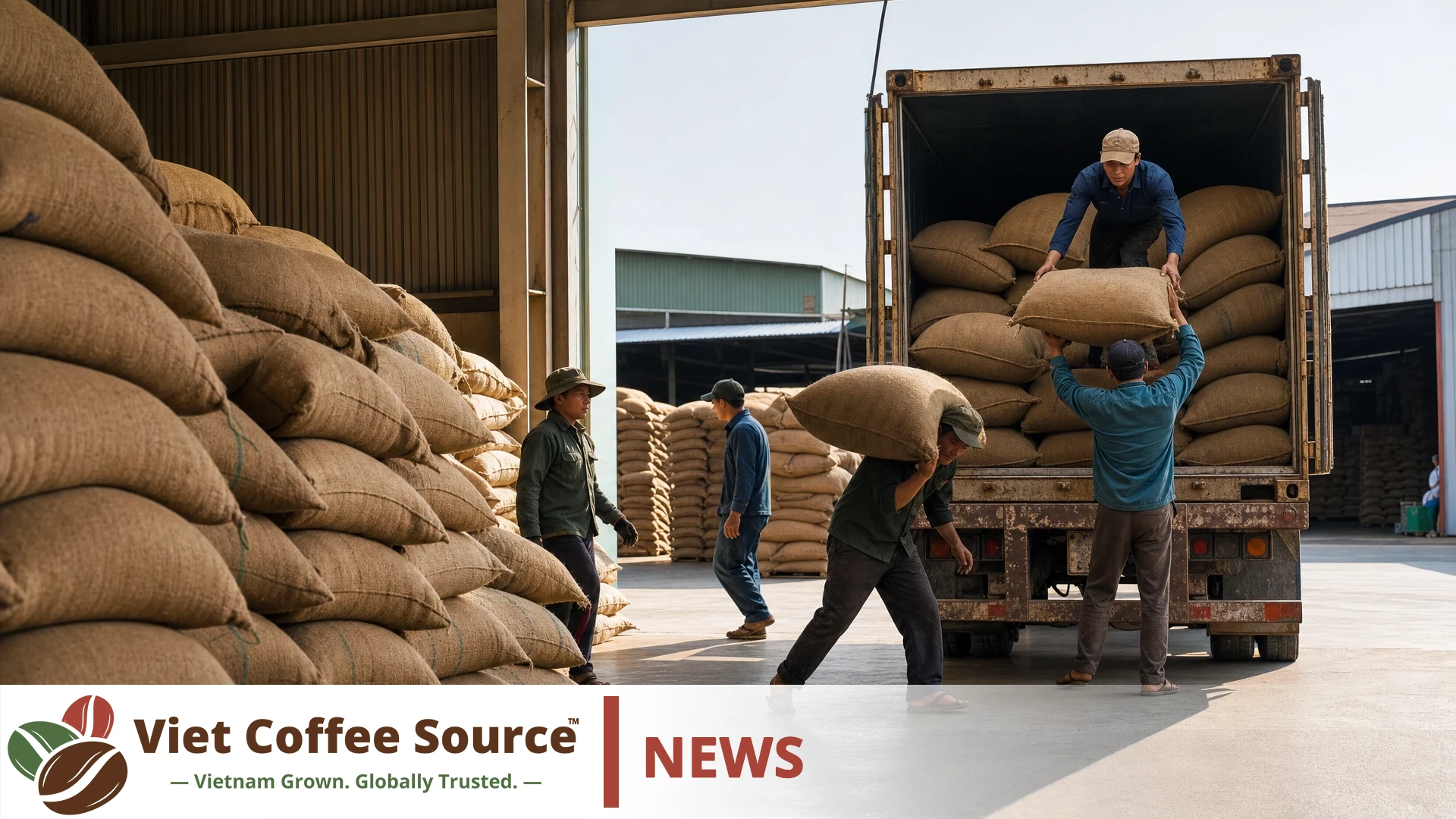
Vietnam Exports More Robusta By Volume But Earns Less Per Tonne — What Buyers Must Do Now
What Happened: More Tonnes, Lower Revenues
Practical Steps Buyers Should Implement Now
With increased volumes but softer average export prices, international buyers should tighten operational controls to convert short‑term commercial leverage into reliable supply. First, formalise sample approval and loading checkpoints: require authorised pre‑loading inspections, documented moisture and screen size readings, and signed certificates of quality before final payment or release. This preserves blend integrity and avoids accepting downgraded lots that dilute retail or private‑label claims.
Second, align commercial terms with logistics realities. Negotiate FOB differentials tied to prompt shipment windows and secure container space early; confirm INCOTERMS and demurrage responsibilities in writing. Match vessel ETAs with inspection and certification timelines so that savings on FOB do not evaporate through port delays or extra handling costs.
Third, manage price and new‑crop exposure through staged procurement and blended hedging. Cover immediate needs using fixed FOBs for prompt cargoes, leave capacity to evaluate new‑crop offers from October, and use a mix of forward commitments and price ceilings to protect margins while retaining flexibility. For large parcels, implement sample approval milestones linked to actual loading.
For buyers supplying HORECA, retail or private‑label chains, emphasise traceability and consistent cup profile in contracts, and build inspection and rejection criteria into purchase orders. These practical measures convert the current buying window into dependable, quality‑assured supply without assuming undue market or logistic risk.
Vietnam’s recent export data show a clear divergence: exporters moved greater Robusta volumes year‑on‑year, yet average export prices declined sharply so that export revenues fell despite higher tonnage. Domestic trade reports and Customs summaries attribute the shift to softer Robusta futures after mid‑year rallies, expectations of larger global supply and active shipments to key destinations such as the EU and China. For international buyers the headline is simple: more physical availability now, but at lower average values and with heightened near‑term price uncertainty.
Practical Commercial Significance For Buyers
For importers, roasters, distributors and private‑label customers this development affects three commercial levers at once: sourcing cost, contract terms and logistics timing. Increased willingness among exporters to ship prompt cargoes and to compete on FOB differentials means buyers who move quickly can secure favourable spot and month‑near deals. At the same time, the decline in average export prices reflects weaker futures and an oversupplied narrative globally — a dynamic that can reverse with weather, harvest or shipping pressures, so buyers must manage both upside and downside price risk.
Where The Negotiating Leverage Lies
Short‑term negotiating leverage concentrates on FOB differentials and shipment premiums. With futures easing from mid‑year highs, sellers seeking to keep flows moving are more open to offering tighter differentials on screened and graded lots or to accepting flexible shipment windows. Buyers who can accept prompt loading and flexible port rotations are likely to extract better FOBs than those requiring distant shipment dates or stringent slot assurances.
Quality And Contract Clauses Matter More
Higher volume push from exporters in a lower‑price environment increases the risk of mix‑downs and quality slippage unless contracts are precise. Buyers should insist on clear quality specifications and differential schedules covering screen sizes, defects, moisture and traceability. Contract language should include tolerance clauses, packing requirements and a practical inspection regime. When sourcing large parcels consider sample approval milestones tied to loading, and make acceptance criteria explicit to preserve the value of blends and private‑label claims.
Timing, Inventory And New‑Crop Risk
Vietnam’s new crop cycle starts to matter from October onward. The current window of increased availability and softer prices sits between the recent harvest and the next crop, creating both opportunity and risk. Buyers can deploy a staged procurement approach: cover near‑term needs to take advantage of present differentials, while leaving flexibility for new‑crop coverage later in the year when supply, quality and prices will be clearer. This sequencing helps manage working capital while avoiding being overly exposed to harvest surprises in the Central Highlands.
Logistics: Book Early, Plan Contingencies
Higher export volumes invariably pressure shipping capacity on certain lanes. Even with lower price levels, exporters and buyers must coordinate early container bookings, confirm INCOTERMS and plan for transhipment or port congestion. Practical steps include aligning vessel ETAs with inspection and certification timelines, negotiating demurrage terms up front and identifying alternate ports or carriers. Freight and slot availability can erode any spot FOB saving if cargo waits at origin or faces extra handling costs.
Price Risk Management
Given recent futures volatility and the potential for price rebounds later in the season, buyers should use mixed hedging techniques to protect margins while preserving upside. A blended programme of fixed FOB contracts for immediate needs and options or ceiling contracts tied to Robusta futures can limit downside while allowing participation in further price falls. Smaller, staggered forward contracts reduce the risk of committing the entire annual requirement at one price point.
Operational Checklist For Immediate Action
- Secure clear quality/differential clauses and sample approval before lifting cargo.
- Negotiate FOB differentials for prompt shipment windows while booking containers early.
- Adopt a staged buying plan: cover short‑term needs now and reassess new‑crop offers from October.
These three actions are practical starting points for buyers seeking to capitalise on current availability without taking excessive market or logistic risk.
Where Demand And Routes Still Matter
Destination demand continues to shape flows: EU markets, China, Japan and other Asian routes remain important outlets for Vietnamese Robusta. Buyers in these regions should monitor regional demand signals and regulatory requirements that could affect arrival windows and certification needs. Additional attention to documentation and quality chains is essential for businesses supplying HORECA, retail brands or private‑label lines where consistent cup profile and traceability underpin commercial trust.
How Viet Coffee Source Can Help
For commercial enquiries, exporters’ offers, or to clarify quality and compliance questions related to Vietnamese origins, use our export resource hub or quality guidance pages. If you are ready to discuss supply, scheduling or tailored private‑label programmes, reach out through our wholesale channel for direct sourcing support and shipment planning.
Explore export services | Review quality and compliance | Learn about Vietnam origins | Contact our wholesale team for sourcing and bookings