
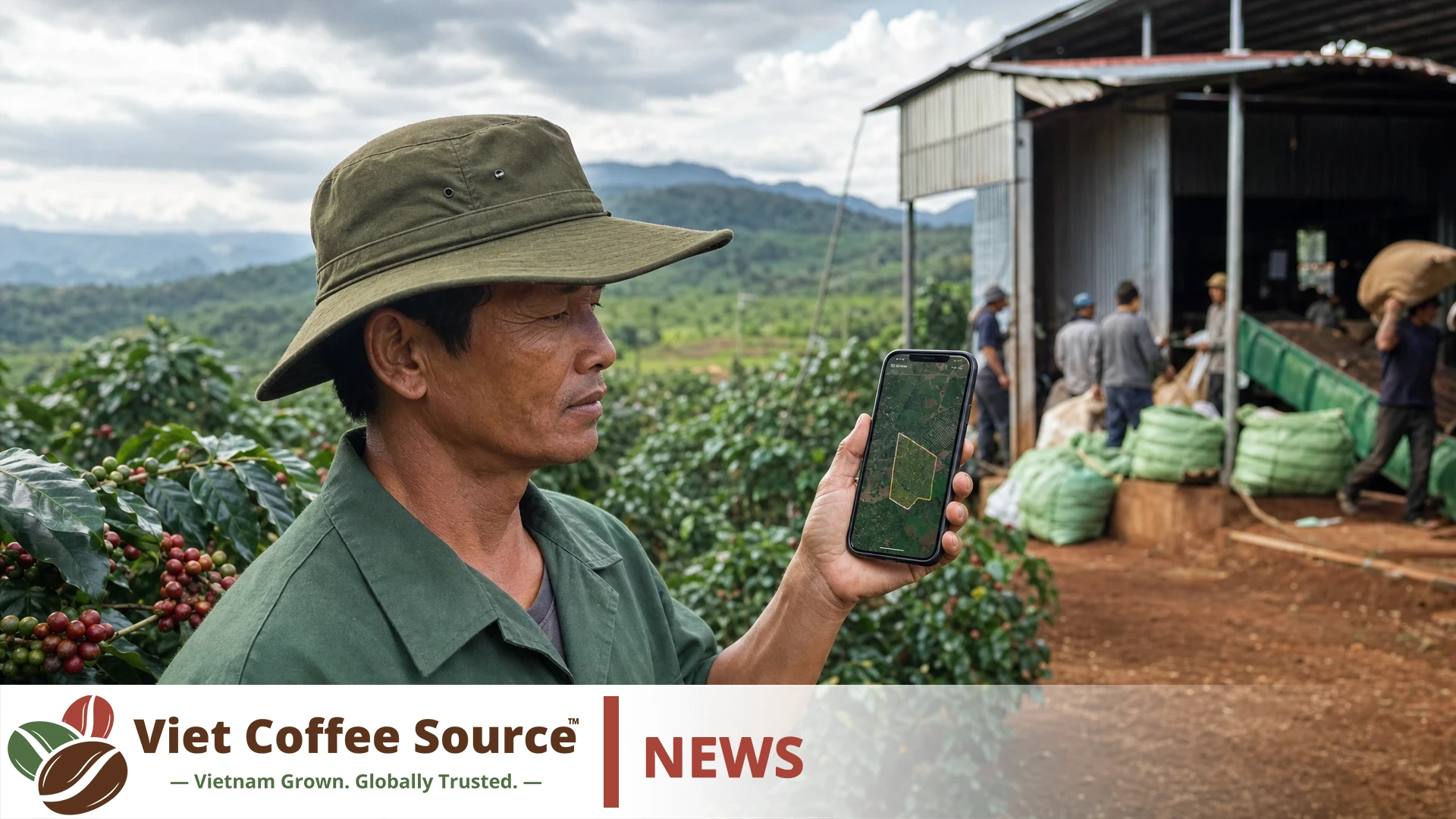
EUDR Pressures Vietnam Coffee Exports: Traceability Shifts Sourcing And Costs
Practical Procurement Actions For EUDR Compliance
Buyers who need reliable EU-eligible supply should translate EUDR requirements into clear procurement checklists and payment conditions. Make verified parcel IDs, producer identification and chain-of-custody documentation a non-negotiable part of order confirmation. Embed documentary milestones into payment triggers so that final payments are only released once lot-level evidence is received and cross-checked.
Negotiate cost-sharing arrangements for data collection and third-party verification with suppliers, especially for multi-year or large-volume contracts. Where continuity is a priority for HORECA, private-label or branded lines, accept a compliance-related premium to avoid supply disruptions. Use multi-year agreements with explicit clauses that allocate verification costs and set timelines for documentation delivery.
Operational Checklist And Partner Roles
Operationally align purchasing, logistics and legal teams to reduce documentary risk. Ensure forwarders and port agents are briefed on EUDR evidence needs and can manage chain-of-custody documents during transit. Consider partnering with exporters participating in jurisdictional programmes or donor-supported initiatives that aggregate verified growing-area records in regions such as the Central Highlands.
Immediate procurement items to apply now:
- Require lot-level GPS/parcel data and producer IDs on supplier onboarding forms.
- Condition final payment on receipt of third-party verification or recognised certification where available.
- Agree up-front who bears verification and documentation costs in POs or LCs.
Key development: The European Union's Deforestation Regulation (EUDR) and accelerating enforcement are now a decisive commercial factor for Vietnamese coffee exports. Vietnamese authorities, exporters and international programmes are rapidly scaling verified growing-area data, chain-of-custody documentation and EUDR compliance support to retain access to EU markets. This movement is already affecting which suppliers can sell into the EU, altering sourcing flows for Robusta and other green coffee and creating near-term consequences for pricing, logistics and contractual requirements for international buyers.
Why This Matters To International Buyers
The EU is a major destination for Vietnam's coffee exports and its EUDR framework will be fully enforced after the transition period. As enforcement tightens, coffee lots without verifiable origin information — such as GPS polygons, parcel-level IDs or recognised sustainability certification — risk being ineligible for EU-bound contracts. For importers, roasters, wholesalers and private-label buyers this changes two basic assumptions: availability and documentation. Some Vietnamese exporters that delayed EUDR readiness have already been unable to ship to EU buyers, creating immediate supply opportunities for compliant suppliers but also potential bottlenecks for specific Robusta lots.
What Buyers Should Require From Suppliers
Practically, buyers should update their supplier onboarding and contract templates to demand specific EUDR evidence at the lot level. Require owner or producer identification, verified growing-area data (GPS or parcel identifiers), chain-of-custody documentation and any third-party verification reports tied to the lot. Contracts and Letters of Credit should include documentary clauses that make EUDR-compliant evidence a condition for payment or release. Without these clauses, buyers expose their supply chains to port-side documentary rejections, delays or reputational risk.
Sourcing Risks And Opportunity Dynamics
As non-compliant exporters are sidelined from EU shipments, compliant exporters are filling gaps. That reallocation can tighten availability for particular grades or origins and may push premiums for lots that carry verified origin data or recognised sustainability claims. Buyers who postpone verification or fail to diversify suppliers risk facing both short-term scarcity and higher prices. Conversely, early engagement with compliant Vietnamese exporters can secure priority access to EU-eligible inventory and reduce interruption risk.
Cost Implications And Pricing Signals
Compliant lots frequently carry added costs: data collection, third-party verification, certification maintenance and administrative compliance. These costs can show up as higher FOB prices or as added documentary and compliance fees, and they will affect landed costs whether the buyer uses FOB or CIF terms. Buyers should plan procurement budgets with an allowance for compliance-related premiums and consider the total cost of ownership, including potential tariff consequences tied to preferential agreements such as EVFTA where traceability supports tariff claims.
Logistics, Documentation And Operational Steps
Operationally, importers and freight partners must be EUDR-aware. Forwarders, insurers and port agents will need to handle documentary scrutiny that reaches back to the farm parcel. To avoid delays, buyers should verify that all logistics partners understand EUDR evidence requirements and can manage chain-of-custody documents during transit. Embedding EUDR checks into purchasing processes—at order placement, pre-shipment inspection and goods receipt—reduces the chance of port holds or administrative rejection.
Recommended immediate steps include a short list of contractual updates and verification routines:
- Make verified growing-area data and chain-of-custody documentation a condition of shipment in POs and LCs.
That single focused action helps enforce supplier compliance while keeping contract language straightforward for finance and legal teams to manage.
Due Diligence And Verification Options
Buyers should embed EUDR requirements into supplier onboarding: collect producer IDs, GPS/parcel data, satellite or third-party verification reports, and certificates where present. Many Vietnamese exporters and donor programmes are building jurisdictional or project-level data platforms that aggregate verified growing-area records. Consider partnering with exporters who already supply EUDR-ready documentation or using third-party verifiers to audit documentary claims. Jurisdictional programmes can simplify verification at scale and are increasingly relevant for multi-farm cooperatives and smallholder supply pools in the Central Highlands and other regions.
Commercial Strategy For Importers And Roasters
Strategically, buyers should prioritise early engagement with suppliers who demonstrate EUDR readiness, diversify sourcing to include compliant exporters, and adjust price negotiations to reflect compliance overheads. Where access to EU markets or preferential tariffs is critical, insist on documented traceability and consider multi-year supply agreements with clauses that share verification costs. For HORECA chains, brands and private-label customers, maintaining continuity of supply may warrant paying a premium for certified or verified lots rather than risking interruptions.
Vietnamese stakeholders — ministries, provinces and exporters — are scaling support, and donor programmes are providing technical assistance to build capacity for EUDR compliance. Buyers that align procurement practices with these developments will find it easier to secure long-term, compliant supply and to manage landed costs effectively.
For importers and buyers ready to act, request verified growing-area data and EUDR documentation at the lot level from your Vietnamese suppliers today. If you need to discuss verified sources or to source compliant lots directly, contact our wholesale team to start the process: /wholesale-inquiry.