
Vietnamese Coffee: The Complete Guide
Vietnamese Coffee: The Complete Guide explains the origins, species, growing regions, processing methods, grades, flavor profiles, brewing traditions, commercial applications and buying requirements that define coffee from Vietnam. The country is widely known as a major Robusta producer, yet its coffee sector is far more diverse than a single species or a single dark-roast style. Vietnam supplies commercial Robusta for soluble coffee and large-volume blends, selected Robusta for espresso and retail products, Fine Robusta for specialty programmes, highland Arabica for filter and espresso, roasted coffee, instant coffee and ingredients for private-label manufacturing.
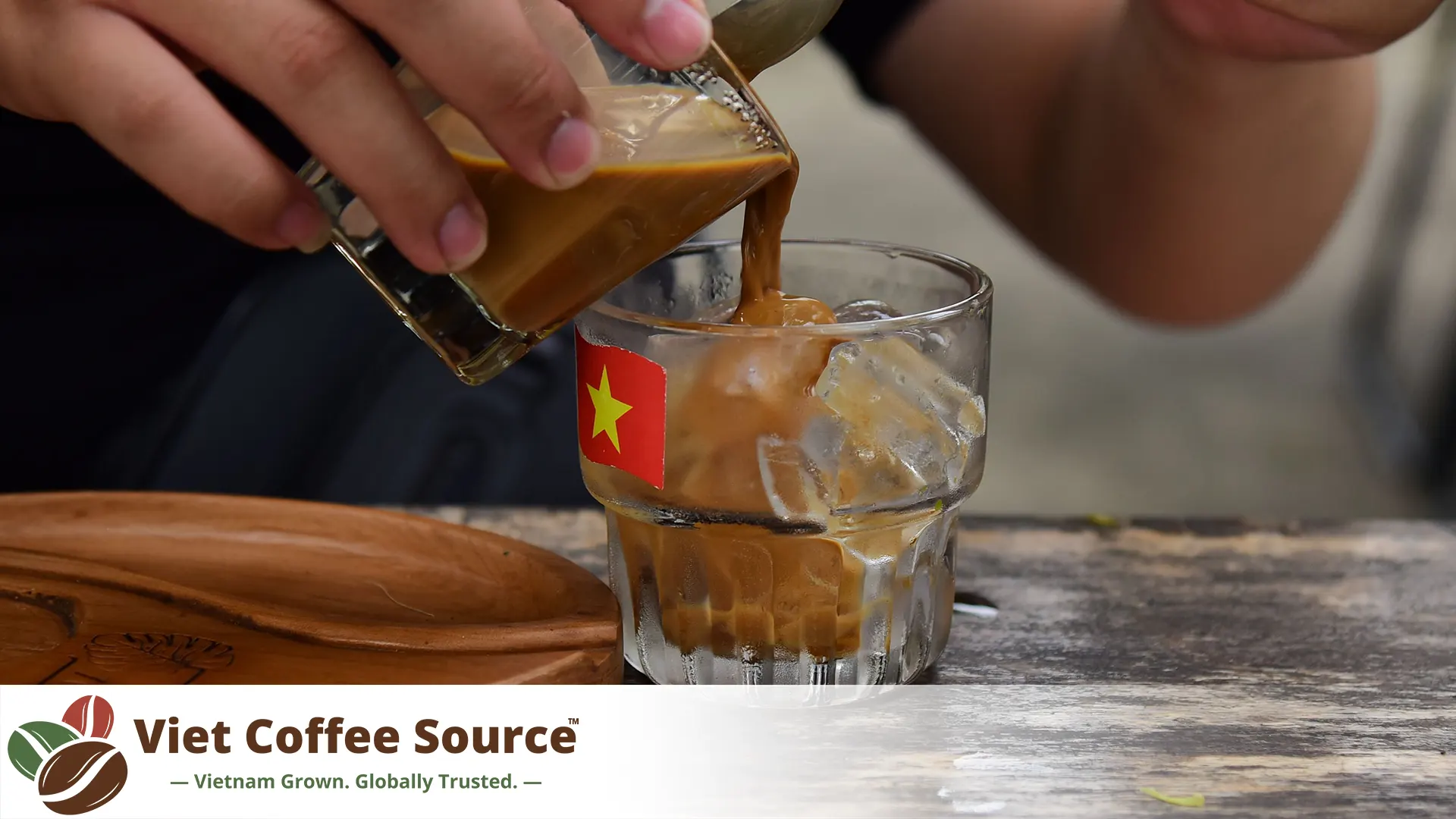
Vietnamese coffee is also a cultural product. Strong phin-brewed coffee, condensed milk, iced coffee, egg coffee, salt coffee and street cafés have created a recognisable identity that extends far beyond agricultural production. For international buyers, however, understanding Vietnamese coffee requires more than knowing a few traditional beverages. Species, origin, crop year, processing, screen size, defect limits, moisture, cup profile, traceability, packaging and shipment terms all influence whether a coffee is appropriate for a particular business.
This complete guide is designed for importers, wholesalers, distributors, roasters, soluble-coffee manufacturers, foodservice operators, café groups, private-label brands and other professional buyers seeking a structured overview of Vietnamese coffee and its commercial potential.
Why Vietnam is important to the global coffee industry
Vietnam developed one of the world’s most significant coffee sectors through large-scale cultivation, specialised highland regions, established collection networks, modern dry mills, export infrastructure and strong experience in international trade. Robusta dominates national output and supports many industrial and commercial applications around the world.
Vietnam’s importance is based on several factors:
- Large and scalable Robusta production
- Strong availability for industrial buyers
- Established export and container-loading systems
- Competitive commercial grades
- Growing Fine Robusta production
- Expanding Arabica and specialty sectors
- Experience in soluble-coffee manufacturing
- Flexible supply for wholesale and private-label programmes
The country serves both price-sensitive and quality-focused markets. A buyer may source standard commercial Robusta for extraction, Screen 18 selected Robusta for a premium blend, washed Arabica for filter coffee or a traceable Fine Robusta microlot from a controlled processing programme.
A brief history of coffee in Vietnam
Coffee was introduced to Vietnam during the nineteenth century under French influence. Early cultivation was limited, but suitable production areas were gradually identified in northern, central and highland regions. Plantations, processing facilities and urban cafés helped establish both commercial production and domestic consumption.
After later agricultural expansion, the Central Highlands became the centre of Vietnamese coffee. Robusta proved particularly suitable for the region’s climate and soils, while Arabica developed in cooler and higher areas such as Da Lat, parts of Lam Dong, Son La and Dien Bien.
Vietnamese consumers adapted coffee to local ingredients and social customs. The metal phin filter, strong roasting, condensed milk and ice created drinks suited to the climate and local preferences. Coffee became part of morning routines, street life, social meetings, business discussions and hospitality.
The main coffee species grown in Vietnam
Vietnamese coffee production is centred on Robusta and Arabica. Smaller quantities of other species or varieties may exist, but commercial buyers will mainly encounter these two categories.
| Coffee category | Typical Vietnamese role | General cup characteristics | Common applications |
|---|---|---|---|
| Commercial Robusta | Largest-volume export category | Strong body, bitterness, cocoa, nuts and high caffeine | Soluble coffee, blends, dark roasts and foodservice |
| Selected Robusta | Prepared to tighter physical or cup specifications | Cleaner body, more consistent flavor and controlled defects | Espresso blends, retail coffee and premium commercial products |
| Fine Robusta | Quality-focused Robusta with improved harvesting and processing | Sweet cocoa, caramel, spice, fruit and cleaner finish | Specialty espresso, premium phin and single-origin programmes |
| Commercial Arabica | Smaller-volume supply from highland regions | Moderate acidity, caramel, nuts, fruit and chocolate | Blends, retail coffee and espresso |
| Specialty Arabica | Traceable and carefully processed Arabica | Fruit, floral notes, citrus, tea, sweetness and clarity | Filter coffee, single-origin espresso and premium retail |
Vietnamese Robusta coffee
Robusta is the foundation of Vietnam’s coffee industry. It grows effectively in the warm conditions and lower-to-medium elevations found across major parts of the Central Highlands. The plants can produce high yields and supply the consistent volumes required by industrial and large commercial buyers.
Typical Robusta characteristics include:
- Heavy body
- High caffeine
- Pronounced bitterness
- Low to moderate perceived acidity
- Cocoa and dark-chocolate notes
- Roasted nuts
- Spice and cereal tones
- Strong extraction performance
Robusta quality varies significantly. Standard commercial material may be purchased primarily according to grade, screen, defect and moisture requirements. Selected or Fine Robusta may also be evaluated for cherry maturity, processing control, water activity, cup cleanliness, sweetness and traceability.
Commercial Robusta
Commercial Vietnamese Robusta supports some of the world’s largest coffee applications. It is commonly used where volume, price, caffeine, extraction strength and consistency are major priorities.
Typical uses include:
- Spray-dried instant coffee
- Freeze-dried instant coffee
- Agglomerated instant coffee
- Three-in-one coffee mixes
- Espresso blends
- Dark-roast retail coffee
- Traditional Vietnamese-style coffee
- Ready-to-drink beverages
Commercial does not mean that specifications are unimportant. Moisture, foreign matter, black and broken beans, screen distribution, crop year, cup condition and bagging still need to be defined contractually.
Fine Robusta
Fine Robusta represents a more quality-focused approach. Producers may use selective harvesting, ripe-cherry sorting, controlled fermentation, improved drying, lot separation and protective storage to create a cleaner and more complex coffee.
Possible Fine Robusta characteristics include:
- Cocoa sweetness
- Caramel
- Roasted almonds or hazelnuts
- Spice
- Dried fruit
- Controlled acidity
- Heavy but smooth body
- Clean finish
Fine Robusta can be used as a single-origin product or as a strategic component in espresso. It may improve body, crema and intensity without introducing the harsh or dirty character associated with poorly prepared commercial coffee.
Vietnamese Arabica coffee
Arabica represents a smaller share of Vietnamese production but plays an important role in premium and specialty markets. It is grown mainly in cooler highland areas where elevation and temperature support slower cherry development.
Vietnamese Arabica may display:
- Citrus
- Red fruit
- Stone fruit
- Floral notes
- Tea-like character
- Caramel
- Chocolate
- Moderate to bright acidity
The final profile depends heavily on variety, altitude, processing, harvest maturity and roast development.
Catimor in Vietnam
Catimor is strongly associated with Vietnamese Arabica production. It was adopted partly because of its agricultural resilience and ability to perform under local conditions. Cup quality can vary from commercial and straightforward to clean and specialty-oriented depending on farm management and processing.
Well-prepared Catimor may offer:
- Caramel sweetness
- Citrus acidity
- Red-fruit notes
- Chocolate
- Spice
- Structured body
Buyers should evaluate the actual lot rather than making assumptions based only on the variety name.
Other Arabica varieties
Some Vietnamese farms and specialty projects cultivate additional Arabica varieties. Availability may be limited, seasonal or linked to specific farms. These coffees can support high-value single-origin programmes but require stronger traceability and advance planning.
Vietnam’s main coffee-growing regions
Vietnamese coffee origins differ in elevation, rainfall, temperature, soil, farm structure and processing infrastructure. These differences influence species selection, harvest timing, bean density and cup profile.
| Region | Main coffee association | General characteristics |
|---|---|---|
| Dak Lak | Large-scale Robusta and Buon Ma Thuot identity | Strong body, cocoa, nuts, spice and major commercial availability |
| Dak Nong | High-volume Robusta production | Heavy body, dark chocolate and suitability for industrial use |
| Gia Lai | Commercial and selected Robusta | Firm structure, cocoa, roasted nuts and moderate spice |
| Lam Dong | Robusta and Arabica production | Broad range from commercial coffee to highland specialty lots |
| Da Lat | Highland Arabica and specialty culture | Caramel, fruit, floral notes, citrus and balanced acidity |
| Son La | Northern Arabica | Fruit, tea, citrus, chocolate and moderate body |
| Dien Bien | Northern highland Arabica | Clean acidity, fruit, caramel and regional character |
| Quang Tri | Smaller regional and specialty production | Potential for traceable Arabica and experimental lots |
Buyers can explore Vietnamese coffee origins and regional growing conditions when developing a sourcing programme based on geography and flavor.
Dak Lak and Buon Ma Thuot
Dak Lak is one of the best-known coffee-producing provinces in Vietnam, and Buon Ma Thuot is widely associated with the country’s Robusta identity. The area supports large-volume farming, collection, dry milling, storage and export preparation.
Coffee from Dak Lak is often selected for:
- Commercial Robusta contracts
- Soluble coffee
- Espresso blends
- Dark-roast retail products
- Vietnamese-style phin coffee
Dak Nong
Dak Nong is another important Robusta-producing area. Its coffee can support industrial extraction, commercial blends and selected retail programmes. Buyers should still define grade and cup requirements because origin alone does not establish quality.
Gia Lai
Gia Lai produces significant Robusta volumes and can offer coffee for commercial, espresso and selected programmes. Profiles may include cocoa, nuts, spice and firm body.
Lam Dong
Lam Dong is important because it includes both Robusta production and cooler highland zones suitable for Arabica. This allows buyers to source several product types within the broader region.
Da Lat
Da Lat is closely associated with Vietnamese Arabica, specialty cafés and coffee tourism. Its cooler climate and elevation can support denser beans, clearer acidity and more aromatic profiles than lower Robusta areas.
Son La and Dien Bien
Northern Vietnam contributes Arabica from regions such as Son La and Dien Bien. These origins can offer distinctive alternatives to Da Lat and may suit buyers seeking regional diversity, traceable lots and differentiated retail stories.
Vietnamese coffee processing methods
Processing begins after harvest and determines how the seed is separated from the fruit and dried. Vietnam uses natural, washed and honey processing, along with modern controlled-fermentation variations.
| Process | Basic method | Typical flavor direction | Common Vietnamese use |
|---|---|---|---|
| Natural | Whole cherries are dried before hulling | Heavy body, fruit sweetness, cocoa and lower perceived acidity | Commercial Robusta and selected specialty lots |
| Washed | Skin, pulp and mucilage are removed before drying | Cleaner cup, clearer acidity and stronger origin definition | Arabica and premium Robusta |
| Honey | Skin is removed while some mucilage remains during drying | Caramel sweetness, rounded body and balanced fruit | Specialty Arabica and Fine Robusta |
| Controlled fermentation | Process uses defined time, temperature, oxygen or microbial conditions | Enhanced fruit, spice or fermentation character | Microlots and specialty programmes |
Natural processing
Natural processing is the traditional choice for much of Vietnam’s Robusta. Whole cherries are dried on patios, tarpaulins, raised beds or in mechanical systems. Once stable, the dried fruit is hulled away.
Advantages include:
- Low water use
- Suitability for large volume
- Heavy body
- Strong sweetness potential
- Compatibility with Robusta
Main risks include uneven drying, mould, overfermentation, ground contamination and rewetting during rain.
Washed processing
Washed processing removes most of the fruit before drying. Fermentation or mechanical equipment eliminates the mucilage, after which the parchment coffee is washed and dried.
Advantages may include:
- Cleaner cup
- Clearer acidity
- Defined flavor separation
- Improved suitability for specialty Arabica
- Reduced heavy-fruit fermentation
The process requires water, equipment, fermentation control and responsible wastewater management.
Honey processing
Honey processing retains part of the mucilage on the parchment during drying. No actual honey is added. The name refers to the sticky, sugar-rich layer around the bean.
Honey coffee may offer:
- High sweetness
- Caramel
- Ripe fruit
- Medium-to-full body
- Balanced acidity
- Long sweet finish
Because the mucilage causes the coffee to stick together, frequent turning and controlled drying are essential.
Controlled and anaerobic fermentation
Some producers use sealed tanks, oxygen-restricted environments, selected yeast or defined fermentation schedules. These methods can produce intense fruit, wine-like notes, spice and unusual aromatics.
Buyers should treat processing terminology carefully. A complex process name does not guarantee quality. Sample evaluation, production records, repeatability and storage stability remain essential.
Harvesting and cherry maturity
Processing quality begins with the harvest. Ripe cherries generally contain more developed sugars and flavor precursors than unripe fruit.
| Cherry condition | Possible cup effect |
|---|---|
| Ripe | Higher sweetness and balanced flavor potential |
| Unripe | Astringency, cereal, green or harsh character |
| Overripe | Heavy fermentation, alcohol or excessive fruit |
| Damaged | Contamination and defect risk |
| Dried on the tree | Uneven fermentation and storage instability |
Commercial harvesting may prioritise efficiency, while specialty programmes generally require more selective picking and sorting.
Drying coffee in Vietnam
Coffee may be dried on concrete patios, tarpaulins, raised beds, covered beds or mechanical dryers. The best system depends on scale, weather, infrastructure and quality target.
Effective drying requires:
- Controlled layer depth
- Regular turning
- Protection from rain
- Clean surfaces
- Temperature monitoring
- Moisture testing
- Lot separation
Mechanical dryers can improve speed and reduce weather dependency but may damage quality if excessive heat is used.
Moisture and water activity
Moisture is a critical commercial specification. Excess moisture increases the risk of mould, microbial activity, condensation and deterioration. Very low moisture can make beans brittle and reduce freshness.
Water activity provides additional information about the water available for chemical and microbial reactions. It is particularly useful for premium natural, honey and fermentation-controlled lots.
Resting and storage before milling
Dried cherries or parchment coffee may rest before dry milling. This can help equalise moisture and stabilise the lot. Storage must remain clean, dry and protected from pests, foreign odors and heat.
Dry milling and export preparation
Dry milling transforms stable dried coffee into export-ready green beans. The operation may include:
- Hulling
- Cleaning
- Destoning
- Screen grading
- Gravity separation
- Color sorting
- Hand sorting
- Polishing when requested
Processing and dry-mill preparation should not be confused. A coffee may be naturally processed but highly polished, or washed but prepared to several different commercial grades.
Vietnamese coffee grades
Vietnamese green coffee is commonly traded according to grade, screen size, defect limits, moisture and other agreed specifications. Grade names alone are not enough because suppliers and buyers may use different tolerances.
A complete specification should state:
- Species
- Origin
- Crop year
- Processing method
- Screen size or distribution
- Black and broken limits
- Total defect limits
- Foreign matter
- Moisture
- Cup requirements
- Packaging
Grade 1 and Grade 2 Robusta
Grade 1 generally represents a tighter physical preparation than Grade 2, but actual contract limits must be written clearly. Buyers should not rely only on the grade name.
| Area | Grade 1 commercial direction | Grade 2 commercial direction |
|---|---|---|
| Defect tolerance | Typically tighter | Typically broader |
| Black and broken beans | Lower accepted levels | Higher accepted levels |
| Preparation | More selective cleaning and grading | Standard commercial preparation |
| Typical use | Retail blends and more controlled applications | Industrial use, soluble coffee and volume programmes |
The contract should define measurable values rather than relying on typical expectations.
Screen sizes
Screen size refers to bean dimensions measured through graded sieves. Common commercial descriptions may include Screen 18, Screen 16 or mixed-screen preparations.
Larger screen does not automatically mean better flavor. It mainly supports roast uniformity, physical presentation and certain product positions.
| Screen preparation | Typical commercial purpose |
|---|---|
| Screen 18 | Premium appearance, more uniform roasting and selected programmes |
| Screen 16 | Balanced commercial preparation for roasting and blending |
| Mixed screen | Industrial, soluble and cost-sensitive applications |
| Custom screen distribution | Buyer-specific roast or manufacturing requirement |
Polished green coffee
Polishing removes part of the silverskin and changes the visual appearance of green coffee. It may create a cleaner or more uniform surface, but it does not automatically improve cup quality.
Buyers should avoid confusing polished coffee with washed coffee. Polishing is a dry-mill treatment, while washed refers to post-harvest fruit removal and fermentation.
Physical defects
Green-coffee defects can affect appearance, roasting and flavor. Common issues include:
- Black beans
- Broken beans
- Insect-damaged beans
- Immature beans
- Shells
- Stones
- Sticks
- Foreign matter
- Mould-damaged beans
Defect limits should be based on an agreed counting method and sample weight.
Cup defects
Physical appearance alone cannot confirm flavor quality. Buyers should also reject undesirable cup characteristics such as:
- Mould
- Phenol
- Harsh chemical notes
- Unacceptable fermentation
- Earthiness from contamination
- Baggy or woody old-crop character
- Severe sourness
- Dirty finish
Vietnamese coffee flavor profiles
Vietnamese coffee does not have one universal flavor. Species, region, process, grade and roast all change the result.
| Coffee type | Possible flavor direction |
|---|---|
| Commercial natural Robusta | Heavy body, bitterness, cocoa, cereal, nuts and dark roast compatibility |
| Selected natural Robusta | Chocolate, roasted nuts, spice, stronger cleanliness and consistency |
| Washed Robusta | Cleaner cocoa, controlled bitterness, moderate acidity and improved finish |
| Fine Robusta | Caramel, cocoa sweetness, dried fruit, spice and smooth body |
| Washed Arabica | Citrus, red fruit, tea, floral notes, caramel and clean acidity |
| Natural Arabica | Berries, tropical fruit, chocolate, wine-like notes and full sweetness |
| Honey Arabica | Caramel, ripe fruit, brown sugar, balanced acidity and rounded body |
Roasting Vietnamese coffee
Vietnamese coffee can be roasted from light to very dark depending on the product. Traditional local styles often use dark development to emphasise body, bitterness and roasted aroma. Specialty programmes may use lighter roasting to preserve fruit, sweetness and origin character.
Roasters should consider:
- Species
- Bean density
- Moisture
- Water activity
- Screen distribution
- Processing method
- Target brewing system
- Use with milk or ice
Traditional dark roasting
Dark roasting can create strong chocolate, caramelised, smoky and nutty profiles. It works especially well for phin coffee, condensed-milk drinks and commercial Robusta blends.
Excessive roasting may hide origin quality, increase harshness and reduce aromatic complexity. The roast should be selected according to the product objective rather than tradition alone.
Medium roasting
Medium roasts can preserve body while increasing sweetness and clarity. They may suit selected Robusta, Fine Robusta, Arabica blends and premium phin products.
Light roasting
Light roasts are more common in specialty Arabica and selected Fine Robusta. They can reveal fruit, flowers, citrus and fermentation character but require careful brewing and quality control.
Vietnamese coffee brewing traditions
The phin filter is the most recognisable Vietnamese brewing tool. It is a small reusable metal brewer placed directly over a cup. Coffee drips slowly through the filter, producing a concentrated beverage without espresso pressure.
How to brew with a phin
- Preheat the cup and phin.
- Add medium or medium-fine ground coffee.
- Level the coffee bed.
- Place the perforated press over the grounds.
- Add a small amount of hot water for blooming.
- Wait briefly.
- Fill the chamber with hot water.
- Cover and allow the coffee to drip.
- Remove the phin when extraction is complete.
- Serve black, with condensed milk or over ice.
Cà phê đen
Cà phê đen is strong black coffee served hot or over ice. It highlights the body, bitterness and roasted character of the coffee.
Cà phê sữa đá
Cà phê sữa đá combines strong coffee, sweetened condensed milk and ice. The bitterness of Robusta remains noticeable through the milk, while the ice turns the concentrated brew into a refreshing drink.
Egg coffee
Egg coffee is associated with Hanoi and combines strong coffee with a whipped mixture based on egg yolk and condensed milk. It has a thick, creamy and dessert-like texture.
Salt coffee
Salt coffee is strongly associated with Hue. A small amount of salt is added to a creamy component to reduce perceived bitterness and emphasise sweetness and body.
Coconut coffee
Coconut coffee combines coffee with coconut milk, coconut cream or a frozen coconut mixture. It is popular in modern cafés and tourism-focused menus.
Bạc xỉu
Bạc xỉu contains more milk and less coffee than cà phê sữa đá. It is sweeter, softer and more milk-forward.
Vietnamese café culture
Coffee shops in Vietnam range from simple sidewalk stalls to historical cafés, modern chains, coworking spaces and specialty bars. Coffee is used for social meetings, business discussions, study, remote work and relaxation.
Common cultural features include:
- Slow drinking
- Long café visits
- Low street seating
- Tea or water served with coffee
- Informal business meetings
- Strong regional drink identities
Vietnamese coffee for espresso
Robusta is widely used in espresso blends because it contributes body, caffeine, crema and intensity. Selected or washed Robusta can support a cleaner premium blend, while Fine Robusta may provide sweetness and complexity.
| Espresso objective | Possible Vietnamese coffee choice |
|---|---|
| Heavy body and crema | Natural Robusta |
| Cleaner commercial blend | Selected or washed Robusta |
| Premium specialty blend | Fine Robusta with Arabica |
| Fruit-forward espresso | Natural or honey Arabica |
| Clear single-origin espresso | Washed Arabica |
Vietnamese coffee for filter brewing
Washed Arabica is often suited to pour-over and batch-filter brewing because it can offer clarity, acidity and origin expression. Natural and honey Arabica may suit menus seeking fruit and sweetness. Carefully prepared Fine Robusta can also create distinctive filter coffee.
Vietnamese coffee for soluble production
Vietnamese Robusta is a major raw material for soluble coffee due to its extraction potential, caffeine, intensity, availability and commercial scale.
Industrial buyers may evaluate:
- Extraction yield
- Soluble solids
- Moisture consistency
- Defect level
- Foreign matter
- Lot repeatability
- Annual supply capacity
- Price stability
Spray-dried instant coffee
Spray drying produces fine soluble powder by atomising concentrated coffee extract into hot air. It is efficient and suitable for high-volume products.
Freeze-dried instant coffee
Freeze drying removes water from frozen coffee extract under reduced pressure. It is generally positioned as a premium format because it can preserve more aroma and create larger granules.
Agglomerated instant coffee
Agglomeration turns fine instant powder into larger particles that dissolve easily and improve visual presentation.
Three-in-one coffee
Three-in-one coffee usually combines instant coffee, sugar and creamer in a single sachet. Vietnam has strong experience in this category and can support customised sweetness, coffee intensity, packaging and private-label formats.
Roasted coffee and private-label products
Vietnamese suppliers may offer green coffee, roasted beans, ground coffee, instant coffee or complete branded products. Private-label buyers should define:
- Coffee type and blend
- Roast level
- Ground size
- Flavor target
- Pack format
- Net weight
- Valve requirements
- Label language
- Carton configuration
- Minimum order quantity
Green coffee specifications
A professional purchase contract should convert quality expectations into measurable specifications.
| Specification area | Information to define |
|---|---|
| Coffee identity | Robusta, Arabica, Fine Robusta or blend |
| Origin | Country, province, district, farm or cooperative where applicable |
| Crop year | Current or specified harvest period |
| Process | Natural, washed, honey or controlled fermentation |
| Grade | Commercial grade or custom preparation |
| Screen | Target screen and minimum retention |
| Defects | Black, broken, foreign matter and total limits |
| Moisture | Agreed range and tolerance |
| Water activity | Maximum value when required |
| Cup | Acceptance profile and prohibited defects |
| Packaging | Bag, liner, net weight and markings |
Sample types
| Sample type | Purpose |
|---|---|
| Type sample | Shows a general product category but may not represent an actual available lot |
| Offer sample | Represents coffee offered for sale at the time of quotation |
| Stock-lot sample | Taken from a specific available lot |
| Pre-shipment sample | Represents coffee prepared before loading |
| Arrival sample | Used to verify the coffee after shipment |
How to evaluate a Vietnamese coffee sample
Sample evaluation should reflect the final application. Specialty cupping alone may not be enough for soluble coffee, dark roasting or milk-based beverages.
A complete evaluation may include:
- Visual inspection
- Odor inspection
- Screen analysis
- Defect counting
- Moisture measurement
- Water-activity measurement
- Sample roasting
- Cupping
- Espresso testing
- Filter testing
- Phin testing
- Industrial extraction trials
Quality control and compliance
Reliable sourcing requires control from farm or collection point through processing, dry milling, storage, bagging and container loading.
Quality systems may include:
- Supplier approval
- Lot identification
- Sampling procedures
- Moisture monitoring
- Defect analysis
- Cup evaluation
- Warehouse inspection
- Pre-shipment verification
- Container cleanliness checks
- Document control
Buyers can review Vietnamese coffee quality-control, traceability and compliance practices when developing supplier-approval requirements.
Traceability
Traceability can range from national and provincial identification to district, cooperative, processing station or individual farm records. The level needed depends on the market, product claim, price and regulatory requirement.
Useful records may include:
- Producer or supplier
- Farm or collection area
- Harvest date
- Processing method
- Drying location
- Warehouse lot
- Mill batch
- Bag numbers
- Container number
- Shipment documents
Sustainability considerations
Vietnamese coffee production faces sustainability questions involving water, fertiliser use, soil management, farm income, climate risk, deforestation, processing waste and energy.
Buyers may evaluate:
- Farm-management practices
- Water efficiency
- Wastewater treatment
- Pulp and husk management
- Energy use
- Worker conditions
- Traceability
- Deforestation-risk controls
- Long-term supplier relationships
EUDR and deforestation-related requirements
Buyers supplying regulated markets may need stronger plot-level traceability, geolocation data, legality documentation and deforestation-risk assessment. Requirements should be verified for the specific destination and transaction because regulatory obligations can change.
Commercial planning should allow time for data collection, supplier verification and document review rather than treating compliance as a final shipping step.
Packaging options
Green coffee can be packed in jute, woven polypropylene or other agreed bags. Premium coffee may use polyethylene or hermetic liners.
| Packaging | Typical use | Main consideration |
|---|---|---|
| Jute bag | Traditional green-coffee export | Breathable but offers limited moisture barrier |
| Woven polypropylene | Commercial and industrial programmes | Durable and practical |
| Bag with polyethylene liner | Selected and premium coffee | Improved moisture protection |
| Hermetic liner | Specialty and high-value lots | Stronger protection from humidity and odors |
| Bulk bag | Large industrial supply | Requires suitable handling and buyer approval |
Container preparation
Container conditions can affect coffee quality during shipment. The container should be clean, dry, structurally sound and free from strong odors, chemicals, pests and water entry.
Preparation may include:
- Floor and wall inspection
- Odor inspection
- Moisture-risk assessment
- Protective paper or liner where required
- Desiccants where appropriate
- Correct bag stacking
- Weight distribution
- Seal recording
Businesses can review Vietnam coffee packaging, shipping and export solutions when planning an international order.
Export documents
Required documents vary according to buyer, destination, Incoterm and product. A shipment may involve:
- Commercial invoice
- Packing list
- Bill of lading
- Certificate of origin
- Phytosanitary certificate where required
- Fumigation certificate where required
- Quality or weight certificate
- Insurance documents where applicable
- Additional compliance records
The required document list should be confirmed before contract signing.
Incoterms and pricing
Coffee quotations may be offered under Incoterms such as EXW, FOB, CFR or CIF. The buyer should compare not only the price but also what is included.
| Quotation element | What to confirm |
|---|---|
| Product price | Coffee grade, specification and crop year |
| Incoterm | Seller and buyer responsibilities |
| Port | Loading and destination port |
| Freight | Included, excluded or estimated |
| Insurance | Included level and coverage |
| Packaging | Bag, liner, weight and palletisation |
| Documents | Standard and additional certificates |
| Shipment period | Loading window and lead time |
Factors that influence Vietnamese coffee prices
Coffee price is influenced by more than species and grade. Important factors include:
- International market conditions
- Crop size
- Weather
- Domestic availability
- Currency movements
- Processing method
- Screen size
- Defect limits
- Traceability
- Packaging
- Freight
- Contract volume
- Shipment timing
Specialty, Fine Robusta, washed, honey and controlled-fermentation coffees may command premiums because of labour, lower yield, process risk, lot separation and quality control.
Choosing a Vietnamese coffee supplier
A reliable supplier should be able to explain the product, sourcing area, processing system, physical specification, quality controls, sample type, packaging and export capability.
The buyer should verify:
- Legal business identity
- Access to actual coffee supply
- Processing or milling capability
- Warehouse conditions
- Quality-control procedures
- Lot traceability
- Export experience
- Document capability
- Communication quality
- Complaint and claims procedures
Common buyer mistakes
- Buying only according to price
- Using a grade name without measurable tolerances
- Assuming larger screen always means better cup quality
- Confusing polished coffee with washed coffee
- Ignoring crop year
- Approving a non-representative sample
- Failing to define moisture
- Ignoring cup defects
- Not checking packaging details
- Comparing quotations with different Incoterms
- Not confirming document requirements
- Failing to inspect pre-shipment quality
Questions to ask before buying
- Is the coffee Robusta, Arabica, Fine Robusta or a blend?
- Which origin and crop year are offered?
- How was the coffee processed?
- What grade and screen distribution apply?
- What are the black, broken and total defect limits?
- What is the moisture range?
- Is water activity available?
- What cup profile is guaranteed?
- Does the sample represent the actual lot?
- Which packaging and liner are included?
- Which Incoterm and port apply?
- Which export documents are included?
- Can a pre-shipment sample be approved?
Choosing coffee by application
| Application | Possible Vietnamese coffee choice | Priority |
|---|---|---|
| Commercial soluble coffee | Natural Robusta Grade 2 or custom industrial grade | Extraction, cost, consistency and volume |
| Premium instant coffee | Selected Robusta with Arabica or washed components | Aroma, cleanliness and soluble performance |
| Traditional phin coffee | Natural Robusta or Robusta-dominant blend | Body, bitterness and roasted intensity |
| Commercial espresso blend | Selected natural Robusta with Arabica | Crema, body and stable flavor |
| Premium espresso blend | Fine or washed Robusta with specialty Arabica | Sweetness, clean body and complexity |
| Specialty filter coffee | Washed, natural or honey Arabica | Clarity, fruit, sweetness and origin |
| Single-origin Fine Robusta | Traceable selected Robusta | Clean cup, cocoa sweetness and distinct processing |
| Private-label retail coffee | Custom green or roasted blend | Repeatability, packaging and brand positioning |
Step-by-step sourcing process
- Define the final product.
- Choose green, roasted, ground or instant coffee.
- Select Robusta, Arabica, Fine Robusta or a blend.
- Define the target flavor and brewing application.
- Select origin and processing method.
- Set grade, screen and defect tolerances.
- Define moisture and cup requirements.
- Request a representative sample.
- Test the sample in the intended production system.
- Confirm lot availability and crop year.
- Compare Incoterms, freight, packaging and documents.
- Approve the contract specification.
- Approve a pre-shipment sample.
- Verify loading and shipment documentation.
The future of Vietnamese coffee
Vietnamese coffee is developing beyond its traditional role as a large-volume Robusta source. Important future directions include:
- Greater recognition of Fine Robusta
- Improved ripe-cherry harvesting
- Expanded washed and honey processing
- More controlled fermentation
- Higher-value Arabica programmes
- Stronger farm and plot traceability
- Improved domestic roasting
- Growth in private-label manufacturing
- More sustainable water and waste management
- International expansion of Vietnamese coffee culture
The strongest opportunities may come from combining Vietnam’s production scale with tighter quality control, traceability, processing knowledge and differentiated product development.
Final assessment
Vietnamese coffee is not a single product but a broad supply category covering commercial Robusta, selected grades, Fine Robusta, Arabica, specialty lots, roasted coffee, soluble coffee and private-label formats. Its value depends on matching the correct coffee to the intended application.
Robusta provides body, caffeine, crema, extraction performance and large-volume availability. Arabica adds acidity, fruit, floral character and premium positioning. Natural processing supports intensity and body, washed processing supports cleanliness and clarity, while honey processing can add sweetness and rounded texture.
Professional buyers should define origin, species, crop year, processing method, grade, screen, defects, moisture, cup profile, packaging, Incoterm, documents and sample-approval procedures before confirming an order. A clear specification protects both buyer and supplier and makes repeatable quality more achievable.
Importers, roasters, soluble-coffee manufacturers, wholesalers, distributors, café groups and brands seeking Vietnamese green, roasted, instant or private-label coffee can submit a wholesale coffee inquiry with the required product type, origin, process, grade, flavor profile, quantity, packaging, destination and preferred shipment period.