
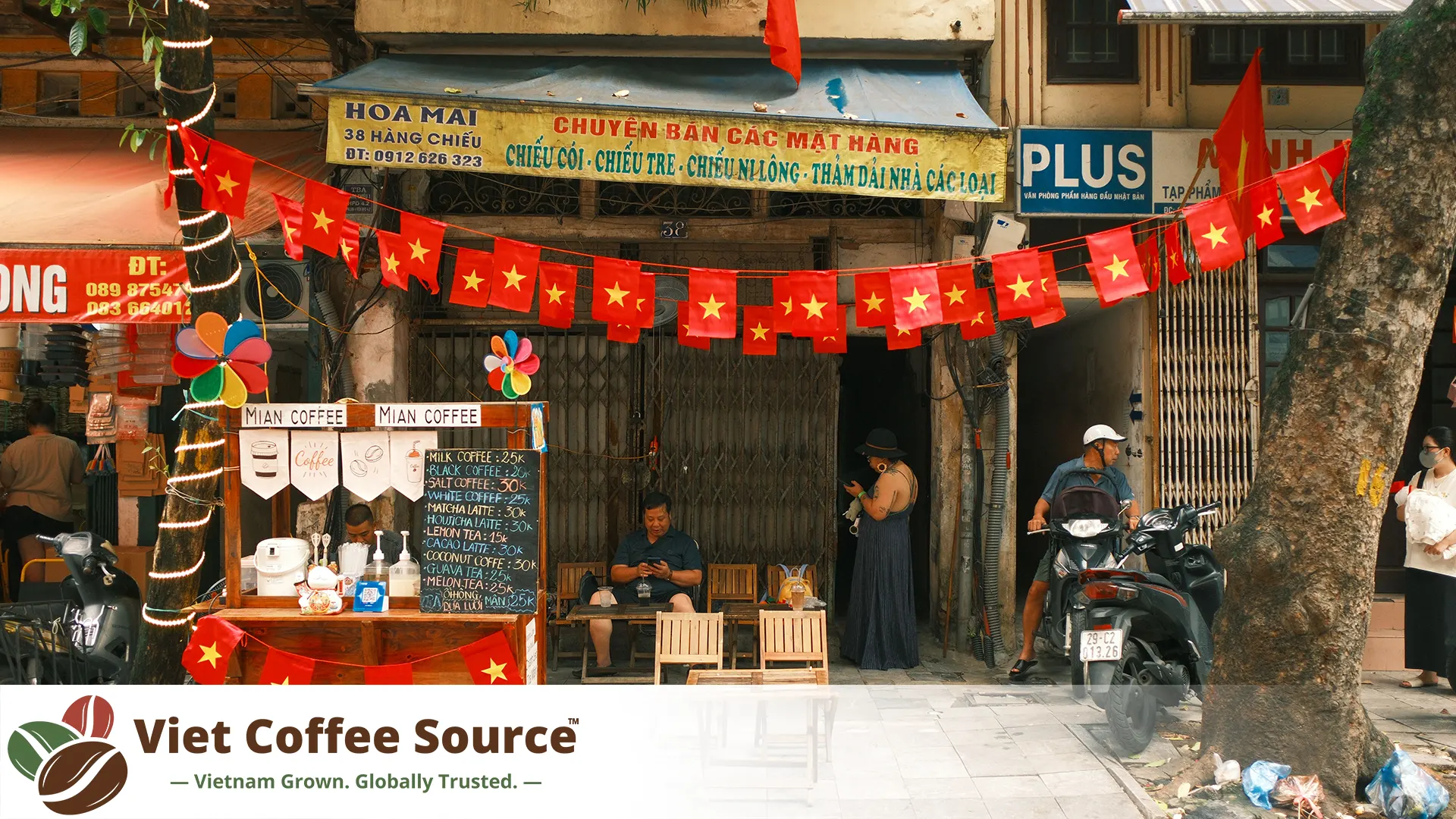
Vietnamese Coffee Culture: History, Brewing Methods and Traditions
Vietnamese Coffee Culture: History, Brewing Methods and Traditions explores how coffee became part of everyday life in Vietnam, how local tastes transformed an imported crop into a distinctive national tradition and why Vietnamese brewing methods continue to attract international interest. Coffee in Vietnam is more than a beverage. It is connected with agriculture, street life, family routines, business meetings, creative culture, hospitality and the rhythm of cities and rural communities. From strong Robusta brewed through a metal phin filter to iced coffee with condensed milk, egg coffee, coconut coffee and modern specialty cafés, Vietnamese coffee culture combines history, practicality and continuous innovation.
The country’s coffee identity developed through several overlapping influences. Coffee was introduced during the French colonial period, expanded through plantation agriculture and later became deeply integrated into local farming and consumption. Vietnamese drinkers adapted coffee to available ingredients, climate and social habits. Strong dark-roasted coffee suited slow extraction, condensed milk provided sweetness and richness when fresh dairy was less accessible and ice made the drink refreshing in a tropical environment.
Today, Vietnam is known globally for large-scale Robusta production, but its coffee culture cannot be understood only through export volumes. Traditional cafés, sidewalk stools, family-run roasters, street vendors, modern chains and specialty businesses all contribute to a diverse coffee landscape. This guide examines the history of Vietnamese coffee, major brewing methods, traditional drinks, regional habits, café culture, serving customs and the relationship between domestic traditions and the international coffee trade.
The introduction of coffee to Vietnam
Coffee arrived in Vietnam through European influence during the nineteenth century. Early cultivation was experimental and limited, but the crop gradually expanded into areas where climate, altitude and soil supported commercial production. French agricultural systems helped establish plantations, processing practices and urban coffee consumption, particularly in administrative and commercial centres.
The early development of coffee in Vietnam involved:
- Introduction of coffee plants through colonial agricultural programmes
- Initial cultivation in northern and central areas
- Expansion into highland regions with suitable conditions
- Growth of cafés serving European-style beverages
- Adaptation of coffee to Vietnamese ingredients and preferences
Over time, coffee moved beyond colonial institutions and became part of local daily life. Vietnamese consumers changed how it was roasted, brewed, sweetened and served, creating traditions that were recognisably different from European café customs.
The rise of the Central Highlands
The Central Highlands became the heart of Vietnamese coffee production because of their basaltic soils, tropical climate, seasonal rainfall and large areas suitable for cultivation. Provinces such as Dak Lak, Dak Nong, Gia Lai and Lam Dong developed extensive coffee economies supported by farmers, collectors, processors, warehouses and exporters.
The growth of highland production affected coffee culture in several ways:
- Robusta became widely available and affordable
- Strong coffee became associated with everyday consumption
- Regional identities formed around coffee farming
- Processing and roasting businesses expanded
- Domestic cafés gained access to reliable local supply
Buon Ma Thuot became especially closely associated with Vietnamese Robusta culture, while Da Lat developed a reputation for cooler-climate Arabica and a more delicate café identity. Readers can explore Vietnam’s principal coffee-growing regions and origin characteristics to understand how geography contributes to production and flavor.
Why Robusta became central to Vietnamese coffee
Robusta is well suited to many Vietnamese growing regions and became the dominant species in domestic production. Its strong body, pronounced bitterness, high caffeine and ability to remain intense when combined with milk or ice made it highly compatible with local brewing traditions.
Robusta contributes several characteristics to traditional Vietnamese coffee:
- Heavy body
- Strong roasted flavor
- High caffeine
- Pronounced bitterness
- Cocoa, nut and cereal notes
- Long-lasting intensity over ice
- Ability to remain noticeable with condensed milk
Traditional Vietnamese coffee is not always made from pure Robusta. Some roasters use blends containing Arabica, Catimor or other coffees to adjust aroma, sweetness and acidity. Nevertheless, Robusta remains central to the classic flavor many consumers associate with Vietnam.
The development of Vietnamese roasting styles
Traditional Vietnamese roasting often aims for a dark, powerful and aromatic result. Deep roasting reduces perceived acidity and emphasises bitterness, caramelised flavors, chocolate, smoke and roasted nuts. Some historical and commercial roasting styles have also used additional ingredients or coatings to create a thicker texture, darker color or distinctive aroma.
Modern Vietnamese roasters now operate across a broad spectrum:
- Traditional dark-roast Robusta
- Robusta and Arabica blends
- Medium-roast coffee for phin brewing
- Specialty Arabica for filter preparation
- Fine Robusta with lighter development
- Single-origin and experimental-process coffees
This diversity means Vietnamese coffee should not be described as one fixed roast style. Traditional dark roasts remain important, but contemporary consumers increasingly explore cleaner, lighter and more origin-focused profiles.
The phin filter
The phin is the most recognisable tool in Vietnamese coffee culture. It is a small metal brewer placed directly on top of a cup or glass. Ground coffee is added to the chamber, a perforated press is positioned over the grounds and hot water is poured in. The coffee then drips slowly into the vessel below.
A typical phin consists of:
- A perforated base or saucer
- A brewing chamber
- A perforated filter press
- A lid
The phin is simple, reusable, portable and does not require paper filters. It produces a concentrated drink that sits between drip coffee and espresso in strength, although it is brewed without espresso pressure.
How traditional phin coffee is brewed
- Warm the cup and phin with hot water.
- Add medium or medium-fine ground coffee to the chamber.
- Level the coffee bed without compressing it excessively.
- Place the filter press over the grounds.
- Add a small amount of hot water to wet the coffee.
- Allow the coffee to bloom briefly.
- Fill the chamber with the remaining hot water.
- Cover the phin and let the coffee drip slowly.
- Remove the filter when extraction is complete.
- Serve black, with condensed milk or over ice.
The exact dose, grind, water temperature and brewing time vary between households, cafés and personal preferences. Some drinkers prefer a slow extraction with heavy body, while others use a slightly coarser grind to produce a cleaner cup.
Why slow dripping matters
The slow drip of a phin is part of both the extraction method and the cultural experience. Coffee is often consumed without urgency. Waiting for the coffee to pass through the filter creates a pause for conversation, observation or quiet reflection.
This slow preparation supports several cultural associations:
- Taking time before beginning work
- Meeting friends without strict scheduling
- Discussing business informally
- Watching street activity
- Enjoying a personal daily ritual
The brewing process therefore has social meaning beyond its technical function.
Cà phê đen
Cà phê đen is black Vietnamese coffee, usually brewed strong through a phin. It may be served hot or over ice. The drink highlights the bitterness, body and roasted character of the coffee without milk.
Common forms include:
- Cà phê đen nóng, served hot
- Cà phê đen đá, served with ice
- Black coffee with added sugar
- Unsweetened black coffee
Because the coffee is concentrated, even a small serving can feel intense. Iced black coffee is especially popular in hot weather and in urban street cafés.
Cà phê sữa đá
Cà phê sữa đá is one of Vietnam’s most internationally recognised coffee drinks. Strong coffee is brewed over sweetened condensed milk, mixed and poured over ice. The combination creates a balance of bitterness, sweetness, richness and cold refreshment.
The drink became culturally important because condensed milk was practical, shelf-stable and able to soften the intensity of dark-roasted coffee. Its thick texture also gives the beverage a distinctive mouthfeel.
| Component | Role in the drink |
|---|---|
| Strong phin coffee | Provides bitterness, caffeine and roasted intensity |
| Condensed milk | Adds sweetness, richness and creamy texture |
| Ice | Cools and slightly dilutes the concentrated brew |
| Mixing | Combines contrasting layers into a balanced beverage |
The ratio of coffee to condensed milk varies greatly. Some drinkers prefer a dark and bitter profile, while others choose a sweeter, more dessert-like cup.
Cà phê sữa nóng
Cà phê sữa nóng is the hot version of coffee with condensed milk. It is especially suitable for cooler mornings, highland climates or drinkers who want a richer and less diluted result.
The drink is usually prepared by placing condensed milk in the bottom of the cup and brewing coffee directly over it. The layers may remain separate until the drinker stirs them together.
Egg coffee
Egg coffee, commonly associated with Hanoi, combines strong coffee with a whipped mixture traditionally made from egg yolk and sweetened condensed milk. The result is thick, creamy and dessert-like, with a texture sometimes compared to custard or foam.
Egg coffee developed as a creative response to limited access to fresh dairy. Rather than simply replacing milk, the egg mixture created a new drink with its own identity.
Typical characteristics include:
- Dense creamy foam
- Strong coffee base
- Sweet custard-like flavor
- Contrast between bitterness and richness
- Warm serving temperature
Many cafés serve the cup inside a bowl of warm water to help maintain the drink’s temperature and texture.
Coconut coffee
Coconut coffee combines coffee with coconut milk, coconut cream or a blended coconut mixture. It is especially popular as a cold drink and may have a smooth, frozen or dessert-like texture.
The beverage appeals to consumers because coconut complements the roasted bitterness of coffee while adding tropical sweetness and richness. It also reflects the continuing creativity of modern Vietnamese café culture.
Yogurt coffee
Yogurt coffee combines strong coffee with sweetened yogurt and sometimes crushed ice. The drink balances coffee bitterness with dairy acidity and sweetness.
Its unusual combination demonstrates an important feature of Vietnamese beverage culture: familiar coffee can be integrated with local desserts, fruits and dairy products without losing its identity.
Salt coffee
Salt coffee is strongly associated with Hue and has gained wider popularity across Vietnam. It usually combines strong coffee with a lightly salted creamy layer. A small amount of salt can reduce the perception of bitterness and emphasise sweetness and body.
The drink is not normally salty in the same way as food. The salt functions as a flavor-balancing element, creating a rounded and rich cup.
Bạc xỉu
Bạc xỉu is a milk-forward coffee drink commonly associated with southern Vietnam. It contains more milk and less coffee than cà phê sữa đá, making it sweeter, softer and more accessible to people who do not want a strong bitter cup.
It may be served hot or iced and is often viewed as a bridge between coffee and a sweet milk beverage.
Major Vietnamese coffee drinks
| Drink | Main ingredients | General style |
|---|---|---|
| Cà phê đen nóng | Strong black coffee | Hot, intense and bitter |
| Cà phê đen đá | Black coffee and ice | Cold, strong and refreshing |
| Cà phê sữa nóng | Coffee and condensed milk | Hot, sweet and rich |
| Cà phê sữa đá | Coffee, condensed milk and ice | Cold, creamy and balanced |
| Egg coffee | Coffee, egg yolk and condensed milk | Creamy and dessert-like |
| Coconut coffee | Coffee and coconut mixture | Tropical, sweet and often chilled |
| Yogurt coffee | Coffee, yogurt and sweetener | Tangy, creamy and refreshing |
| Salt coffee | Coffee, cream and a small amount of salt | Rich, balanced and softly sweet |
| Bạc xỉu | Milk, condensed milk and a smaller amount of coffee | Mild, sweet and milk-forward |
Hanoi coffee culture
Hanoi is known for long-established cafés, narrow interior spaces, hidden upper-floor locations, low seating and a strong tradition of slow social coffee drinking. Egg coffee is closely connected with the city, but black coffee, condensed-milk coffee and modern specialty drinks are also widely available.
Hanoi café culture often emphasises:
- Historic surroundings
- Small independent cafés
- Conversation and observation
- Traditional drinks
- Creative use of old buildings
- A slower atmosphere than many chain cafés
Some cafés become destinations because of their architecture, history, views or association with artists and writers.
Ho Chi Minh City coffee culture
Ho Chi Minh City has an energetic and highly diverse coffee scene. Sidewalk stalls, street vendors, traditional cafés, modern chains, coworking cafés and specialty shops operate alongside one another.
The city’s coffee habits reflect its commercial pace and warm climate. Iced coffee is especially common, and cafés function as places for meetings, remote work, socialising and quick breaks.
Typical characteristics include:
- Strong popularity of iced coffee
- Large number of modern café concepts
- Wide use of takeaway service
- Strong connection between coffee and business meetings
- Combination of traditional and international brewing methods
Hue and central Vietnamese traditions
Hue has a distinct culinary identity and is closely associated with salt coffee. The city’s café culture often reflects a quieter pace, traditional aesthetics and strong regional food traditions.
Central Vietnam also includes growing specialty communities and cafés that use local Arabica, Robusta and creative regional ingredients.
Da Lat café culture
Da Lat combines coffee production, tourism, cool weather and a strong café identity. The city’s location within an important Arabica-growing area gives consumers greater exposure to local origin stories, farms, roasting and specialty preparation.
Da Lat cafés may feature:
- Locally grown Arabica
- Farm-to-cup storytelling
- Pour-over brewing
- Espresso-based drinks
- Natural and honey-process coffees
- Views of hills, farms and pine landscapes
The cooler climate also supports a stronger culture of hot coffee compared with many southern cities.
Sidewalk coffee
Sidewalk coffee is one of the clearest expressions of everyday Vietnamese café culture. Small plastic or metal stools are arranged outside shops, near markets or along busy streets. Customers sit close to traffic and pedestrian activity while drinking slowly.
Sidewalk cafés are important because they are:
- Affordable
- Accessible
- Informal
- Social
- Integrated into neighbourhood life
- Suitable for short or long visits
The environment may appear simple, but it creates a powerful sense of place. The street itself becomes part of the café experience.
Coffee and social relationships
Inviting someone for coffee in Vietnam can mean much more than consuming a drink. It may indicate friendship, courtship, business discussion, reconciliation, networking or a desire to spend unstructured time together.
Coffee meetings are often flexible and may continue for a long period. The café provides a neutral space where people can speak privately without the formality of an office or restaurant.
Coffee as a business ritual
Cafés are widely used for professional meetings, especially among small-business owners, sales professionals, freelancers and entrepreneurs. A coffee meeting may be the first step before a formal negotiation or contract.
Business coffee culture values:
- Informal relationship building
- Face-to-face trust
- Flexible meeting locations
- Extended conversation before commercial details
- Hospitality toward visitors
For international buyers, understanding this social dimension can improve communication with suppliers and business partners.
Family and household coffee habits
Many households prepare coffee at home using a phin, pre-ground roasted coffee or packaged blends. The brewing process may be part of the morning routine, especially before work.
Home preparation often reflects personal habits rather than strict technical recipes. Families may adjust coffee strength, condensed milk, sugar and ice according to individual preference.
Traditional cafés and modern chains
Vietnamese coffee culture now includes both independent traditional cafés and large modern chains. These formats serve different needs but frequently overlap.
| Café format | Typical characteristics | Main customer purpose |
|---|---|---|
| Sidewalk stall | Low-cost, informal and close to street activity | Daily routine, conversation and quick refreshment |
| Traditional independent café | Phin coffee, local atmosphere and long visits | Social meetings and relaxation |
| Modern chain | Consistent menu, air conditioning and work-friendly seating | Meetings, study, remote work and convenience |
| Specialty café | Origin information, lighter roasts and multiple brew methods | Flavor exploration and coffee education |
| Tourism-focused café | Distinctive design, views and photogenic drinks | Experience, travel and social media |
The growth of specialty coffee
Vietnam’s specialty coffee movement has expanded interest in farm identity, selective harvesting, processing control, lighter roasting and detailed sensory evaluation. Specialty cafés increasingly serve Vietnamese Arabica, Fine Robusta and experimental-process lots alongside imported coffees.
This movement has encouraged:
- Greater attention to ripe-cherry selection
- Improved drying and fermentation
- Farm and producer traceability
- Use of pour-over and espresso equipment
- Consumer education about origin
- Recognition of high-quality Robusta
The specialty sector does not replace traditional coffee culture. Instead, both styles coexist and influence each other.
Modern brewing methods in Vietnam
Although the phin remains iconic, Vietnamese cafés now use many international brewing systems.
- Espresso machines
- Pour-over drippers
- AeroPress
- French press
- Cold brew
- Siphon brewers
- Batch filter machines
Modern cafés may use these methods with Vietnamese-grown Arabica, Fine Robusta or blends, creating new interpretations of local coffee.
Cold brew and contemporary drinks
Cold brew has become popular among younger consumers and specialty cafés. Its lower perceived bitterness and smooth texture make it suitable for warm climates.
Contemporary Vietnamese menus may combine cold brew with:
- Citrus
- Coconut water
- Tonic water
- Fruit syrups
- Milk foam
- Local spices
These drinks show how Vietnamese coffee culture continues to evolve without abandoning its traditional foundation.
Serving customs
Vietnamese coffee is often served with a glass of water or tea. The additional drink refreshes the palate and balances the strong coffee. In many traditional cafés, tea may be offered automatically.
Common serving habits include:
- Leaving the phin on the cup while the coffee drips
- Serving condensed milk in the bottom of the glass
- Providing a separate glass filled with ice
- Offering water or tea alongside coffee
- Allowing customers to sit without pressure to leave quickly
Coffee and time
One of the defining features of Vietnamese coffee culture is the willingness to spend time over a relatively small drink. The value of the café experience is not measured only by volume or speed.
Customers may remain at a table to:
- Talk with friends
- Observe street life
- Read
- Work
- Use a phone
- Wait for an appointment
- Think quietly
This makes coffee part of the daily social environment rather than merely a functional source of caffeine.
Vietnamese coffee and hospitality
Offering coffee can be a gesture of welcome in homes, offices and commercial settings. The drink may be prepared according to the guest’s preference, with questions about sweetness, milk or ice.
Hospitality is expressed through the time taken to brew and serve the coffee. A phin prepared for a guest is both a beverage and a small ceremony.
Traditional flavor expectations
Many Vietnamese consumers historically preferred strong, dark and sweet coffee. These expectations developed through Robusta availability, dark roasting, condensed milk and phin brewing.
Traditional flavor preferences often include:
- Strong roasted aroma
- Heavy body
- Pronounced bitterness
- Chocolate or caramel character
- High sweetness when milk is added
- Long finish
Younger and specialty-focused consumers may prefer lighter roast profiles, clearer acidity and more origin-specific flavors, creating a broad market rather than a single national preference.
Regional differences in coffee style
| Region or city | Common associations | Notable drinks or habits |
|---|---|---|
| Hanoi | Historic cafés, slow atmosphere and hidden locations | Egg coffee, hot phin coffee and traditional seating |
| Ho Chi Minh City | Fast-moving, diverse and commercially oriented café scene | Iced coffee, takeaway service and business meetings |
| Hue | Regional culinary identity and quieter café culture | Salt coffee |
| Da Lat | Highland production, cool climate and specialty influence | Local Arabica, hot coffee and farm-linked cafés |
| Central Highlands | Connection to Robusta farming and production | Strong local coffee and origin identity |
The role of condensed milk
Condensed milk is one of the most important ingredients in Vietnamese coffee tradition. Its long shelf life, sweetness and richness made it practical in a climate where fresh milk was historically less available.
Condensed milk performs several functions:
- Softens bitterness
- Adds creamy texture
- Balances dark-roast intensity
- Creates visual layers
- Supports iced preparation
- Produces a consistent flavor
Its role is cultural as well as practical. For many consumers, the flavor of condensed milk and strong coffee immediately signals Vietnamese coffee.
The role of ice
Ice transforms concentrated coffee into a refreshing drink suitable for a tropical climate. It also gradually changes the flavor as it melts, reducing intensity while maintaining the coffee’s roasted character.
Strong brewing is therefore important because the coffee must remain expressive after dilution.
Coffee, tourism and national identity
Vietnamese coffee has become an important part of the country’s tourism identity. Visitors seek out phin coffee, egg coffee, coffee farms, roasting workshops and distinctive cafés.
Popular coffee experiences include:
- Learning to use a phin
- Visiting a coffee farm
- Tasting Robusta and Arabica side by side
- Trying egg, coconut or salt coffee
- Buying locally roasted coffee
- Exploring historic cafés
Coffee tourism also creates opportunities for producers and brands to communicate origin, quality and cultural value.
Vietnamese coffee culture in international markets
Vietnamese cafés and beverage concepts have expanded internationally, introducing consumers to phin brewing, condensed-milk coffee and Robusta-based drinks. Retail brands also sell Vietnamese coffee kits, metal filters and ready-to-drink products.
International businesses may develop products such as:
- Vietnamese-style roasted coffee
- Phin brewing kits
- Condensed-milk coffee beverages
- Ready-to-drink iced coffee
- Robusta-based espresso blends
- Vietnamese coffee gift sets
Successful international positioning requires respect for the cultural origin while adapting sweetness, strength, packaging and serving format to local consumers.
Cultural authenticity and commercial adaptation
Brands using Vietnamese coffee traditions should distinguish between cultural inspiration and authentic origin claims. A beverage may be Vietnamese-style without using coffee grown in Vietnam, but this should be communicated honestly.
Authenticity may involve:
- Vietnamese-grown coffee
- Traditional phin preparation
- Use of condensed milk
- Recognition of regional drink origins
- Accurate naming and explanation
- Respectful visual and marketing presentation
Coffee quality behind the tradition
Traditional preparation does not eliminate the importance of green-coffee quality. Moisture, defects, crop year, processing and storage influence the final drink even when coffee is dark roasted and mixed with condensed milk.
For higher-quality Vietnamese coffee programmes, buyers should assess:
- Origin
- Species and variety
- Processing method
- Screen distribution
- Defect limits
- Moisture
- Crop year
- Cupping profile
- Packaging
Businesses can review Vietnamese green-coffee quality-control, traceability and compliance practices when selecting beans for traditional or modern coffee products.
Choosing coffee for traditional Vietnamese preparation
| Product objective | Possible coffee choice | Priority characteristics |
|---|---|---|
| Classic strong phin coffee | Commercial or selected Robusta | Heavy body, bitterness and strong roasted flavor |
| Cà phê sữa đá | Robusta or Robusta-dominant blend | Intensity that remains clear with milk and ice |
| Premium phin coffee | Fine Robusta or balanced Robusta-Arabica blend | Clean cup, sweetness and controlled bitterness |
| Modern filter coffee | Vietnamese Arabica | Acidity, clarity, fruit and floral aroma |
| Specialty espresso | Arabica with selected Robusta | Sweetness, body, crema and complexity |
| Ready-to-drink coffee | Consistent commercial Robusta or blend | Extraction stability, flavor intensity and repeatability |
Buying coffee for Vietnamese-style products
Importers, cafés and manufacturers developing Vietnamese-style beverages should first define the intended taste and brewing system. A very dark traditional phin product requires a different green-coffee specification from a premium single-origin filter coffee.
Buyers should determine:
- Robusta, Arabica or blend ratio
- Commercial or specialty positioning
- Desired bitterness and body
- Target roast level
- Use with milk, ice or other ingredients
- Required extraction performance
- Packaging and shelf-life needs
- Annual volume
Export and packaging requirements should also be planned carefully. Companies can review Vietnam coffee packaging, container and export solutions when developing an international supply programme.
Common misunderstandings about Vietnamese coffee
- Assuming all Vietnamese coffee is extremely dark roasted
- Believing all Vietnamese coffee contains additives
- Treating Robusta as automatically low quality
- Assuming phin coffee is the same as espresso
- Believing condensed milk is used in every drink
- Ignoring Vietnam’s Arabica and specialty production
- Reducing the culture to only cà phê sữa đá
Vietnamese coffee culture is broad enough to include traditional street coffee, industrial products, regional drinks, specialty cafés and innovative modern beverages.
How to experience Vietnamese coffee culture
- Try a traditional phin coffee without milk.
- Compare it with cà phê sữa đá.
- Visit both a sidewalk café and a modern specialty café.
- Try a regional drink such as egg coffee or salt coffee.
- Compare Vietnamese Robusta and Arabica.
- Observe how long customers remain in cafés.
- Visit a coffee-growing region when possible.
- Learn how local roasting and brewing methods change flavor.
The future of Vietnamese coffee culture
Vietnamese coffee culture continues to develop through urbanisation, tourism, specialty coffee, digital work habits, changing consumer preferences and greater interest in sustainability and origin. Traditional phin coffee remains strong, but new generations are also exploring lighter roasts, premium Robusta, single-origin Arabica and innovative beverages.
Future development is likely to include:
- Greater recognition of Fine Robusta
- More traceable farm-based products
- Expansion of specialty cafés
- Improved domestic roasting
- International growth of Vietnamese beverage concepts
- More sustainable packaging and production
- Stronger links between tourism and coffee origins
Final assessment
Vietnamese coffee culture developed by transforming an introduced crop into a distinctive system of farming, roasting, brewing and social interaction. Robusta production in the Central Highlands provided the foundation, while phin brewing, condensed milk, ice and local creativity shaped the drinks recognised today.
The culture includes much more than strong iced coffee. It covers Hanoi egg coffee, Hue salt coffee, southern bạc xỉu, coconut coffee, traditional sidewalk cafés, family brewing, business meetings, specialty roasting and farm-based origin programmes. Each expression reflects a different part of Vietnamese history and daily life.
The phin remains the most important symbol because it combines simplicity, slow extraction and social time. At the same time, espresso, pour-over, cold brew and experimental drinks show that Vietnamese coffee culture is dynamic rather than fixed.
Importers, roasters, cafés, distributors and brands seeking coffee for traditional Vietnamese beverages or modern origin-based products can submit a wholesale coffee inquiry with the preferred coffee type, origin, flavor profile, processing method, roast application, quantity, packaging, destination and shipment period.